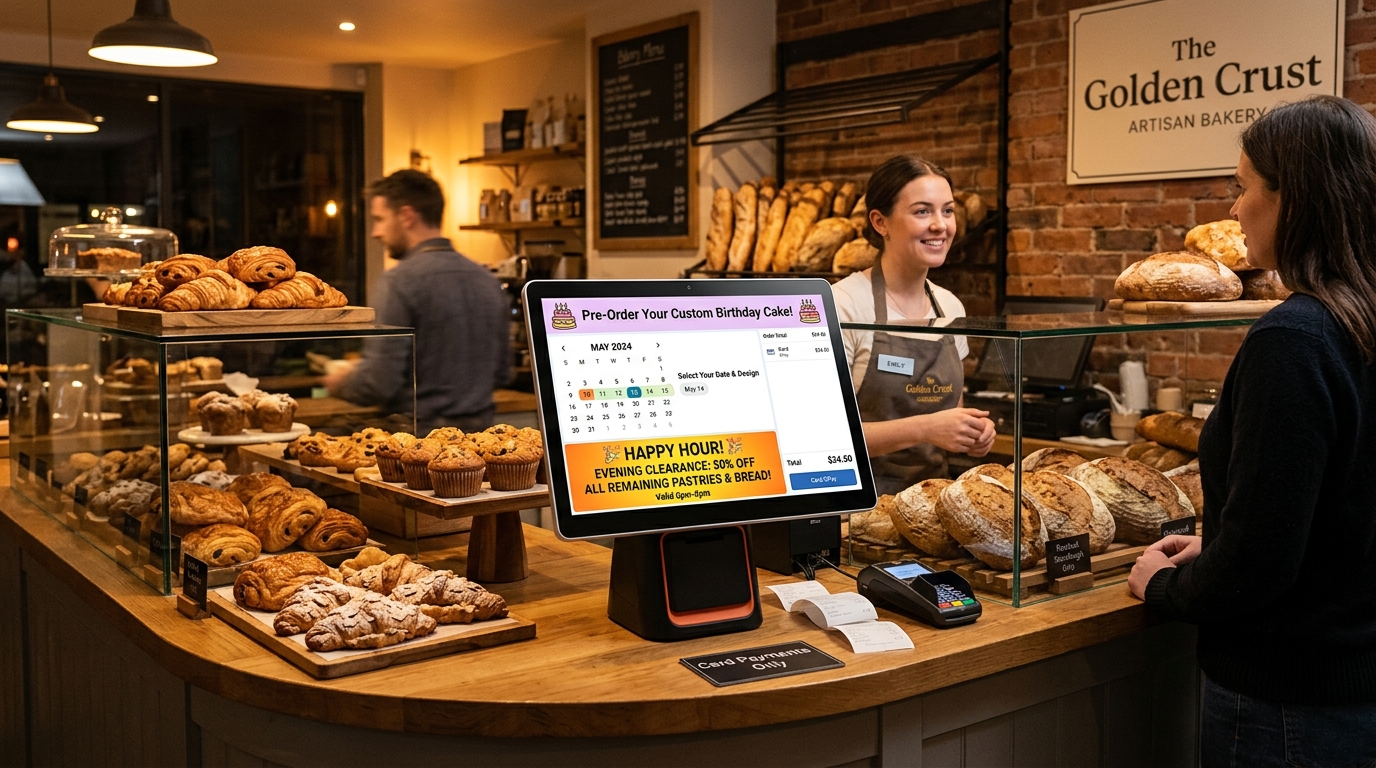
Point-of-sale architectures tailored for retail bakeries, patisseries, and custom pastry studios navigate physical constraints distinct from standard durable retail: acute inventory perishability (half-life < 24 hours) and multi-stage transformation from raw ingredients to finished goods.
To eliminate manual cashier discounting errors and prevent stock depletion blind spots, the system must support time-decay pricing state machines, hierarchical Bill-of-Materials (BOM) yield decomposition, and two-phase pre-order deposit lifecycle transitions.
This engineering paper breaks down the technical mechanisms powering GeminiPOS's Perishable Goods & Dynamic Bakery Engine.
---
1. System Architecture & Inventory Lifecycle Topology
!Bakery Production Yield & Dynamic Clearance Pricing Process Pipeline
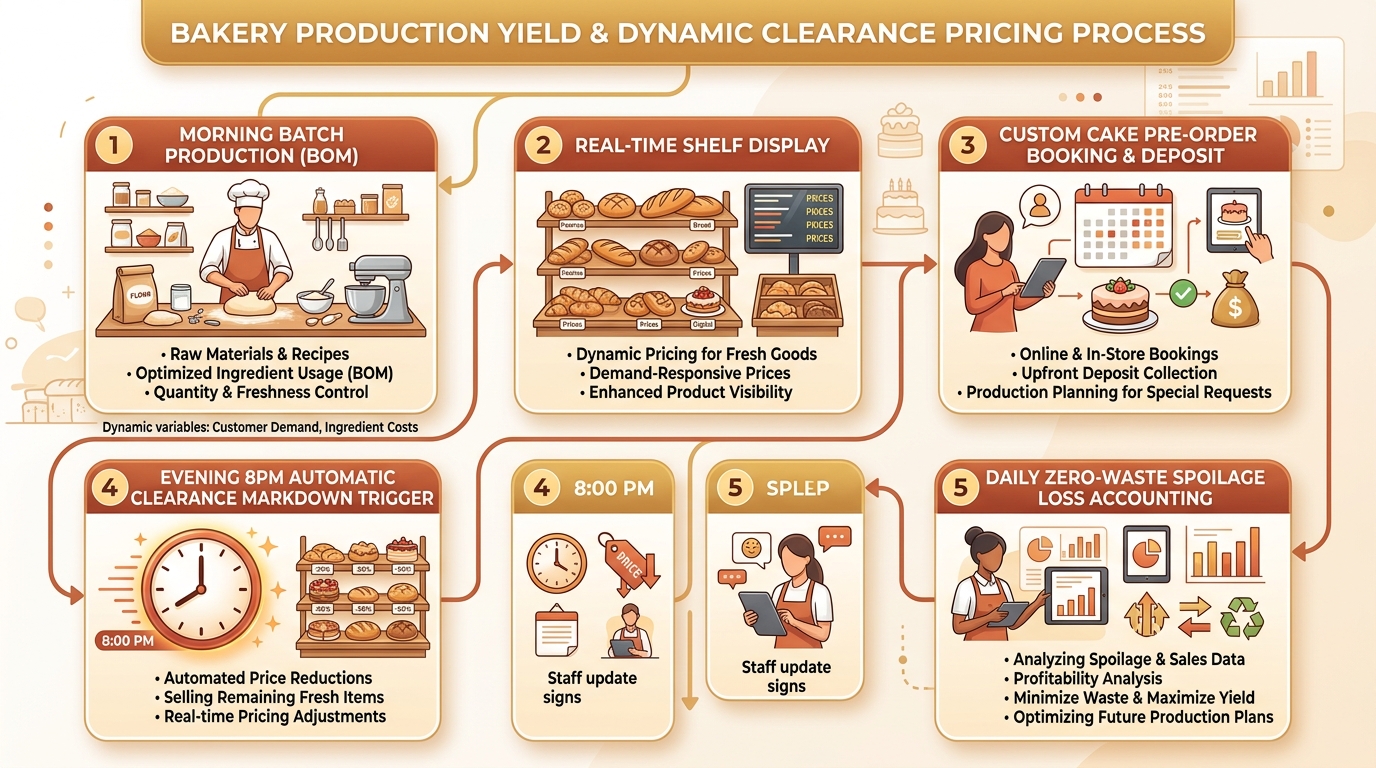
The architecture coordinates raw ingredient consumption, real-time counter sales, and time-scheduled clearance rules:
---
2. Recursive Bill of Materials (BOM) Consumption Stored Procedure
When finished goods are produced or sold, the inventory engine can either consume stock at production time (batch yield) or decompose dynamically at tender time (virtual kit). Below is the PostgreSQL atomic batch decomposition procedure:
---
3. Temporal Price-Decay State Machine
To enforce evening markdown clearance without requiring staff to reprice shelf labels or apply manual cashier discounts, GeminiPOS evaluates dynamic pricing policies client-side using an edge rule engine:
---
4. Custom Cake Pre-Order Deposit Escrow Machine
Custom bakery orders represent future fulfillment obligations that require two-phase financial accounting:
- Pre-Order Booking & Escrow Allocation: The customer deposits 50% upfront. This tender is booked into an
UNEARNED_PREORDER_LIABILITYgeneral ledger account, not recognized as instant merchandise revenue. - Kitchen Production Synchronization: The order transitions to
IN_PRODUCTION24 hours prior to fulfillment. The native ESC/POS thermal printer in the bakery kitchen prints the preparation docket with customized piping instructions. - Pickup Settlement & Revenue Recognition: Upon collection, the customer tenders the remaining balance. The system automatically reconciles the escrow deposit, recognizes 100% of the sale in
MERCHANDISE_REVENUE, and archives the pre-order.
Through this robust separation of concerns, bakery enterprises eliminate spoilage, maintain accurate recipe unit costs, and prevent pre-order fulfillment errors at scale.