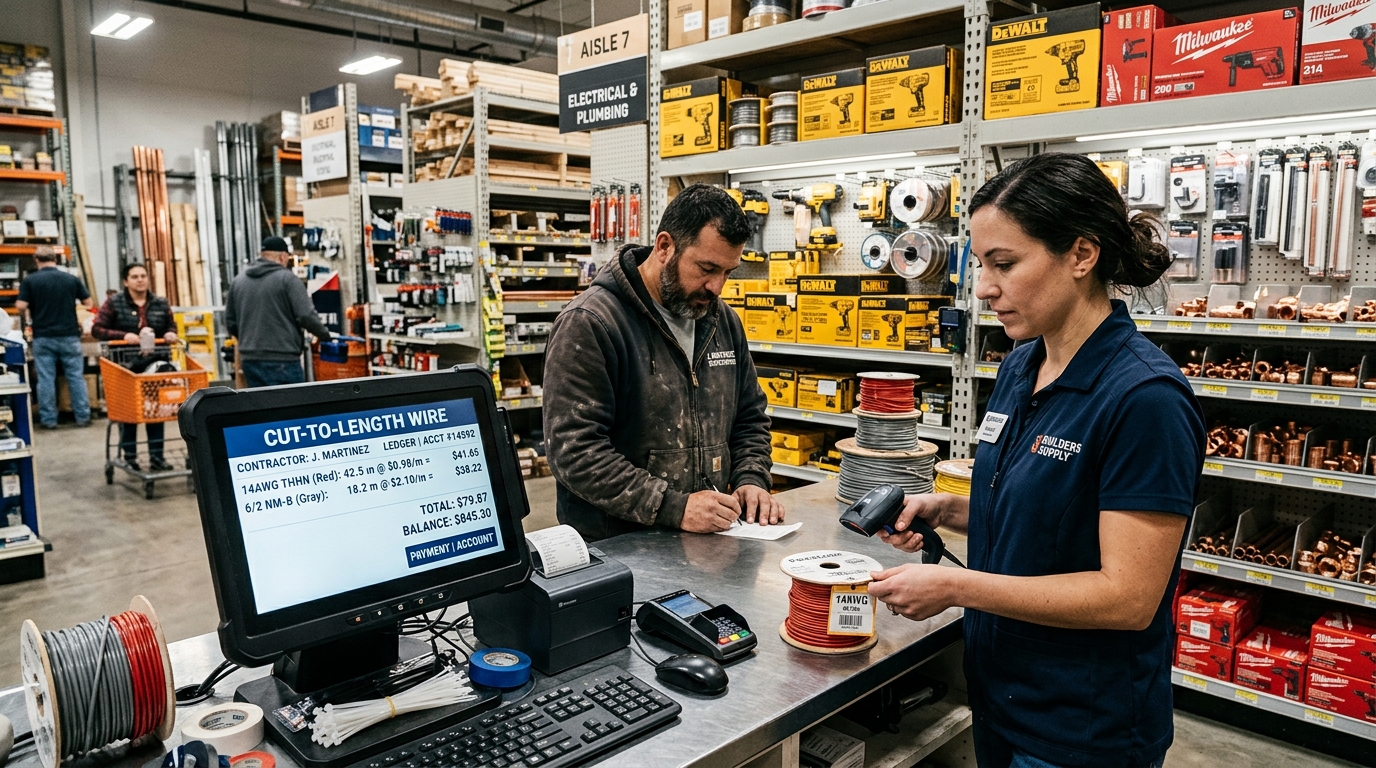
Point of sale systems operating within heavy hardware, industrial supply, and construction materials retail encounter foundational architectural challenges that discrete retail models cannot resolve.
Hardware inventory requires managing non-discrete continuous physical assets (e.g., cutting 13.8 meters of cable from a 500m master reel, or packaging 250 grams of brass fasteners from a bulk 50kg barrel), alongside managing high-exposure contractor accounts receivable with real-time credit ceiling validation.
This whitepaper presents the software architecture of GeminiPOS's Dynamic UOM Conversion & Contractor Credit Engine, detailing relational tree structures, atomic transactional procedures, and offline dispatch safeguards.
---
1. System Architecture & Inventory Pipeline
!Hardware and Building Materials Dynamic Inventory & Logistics Pipeline
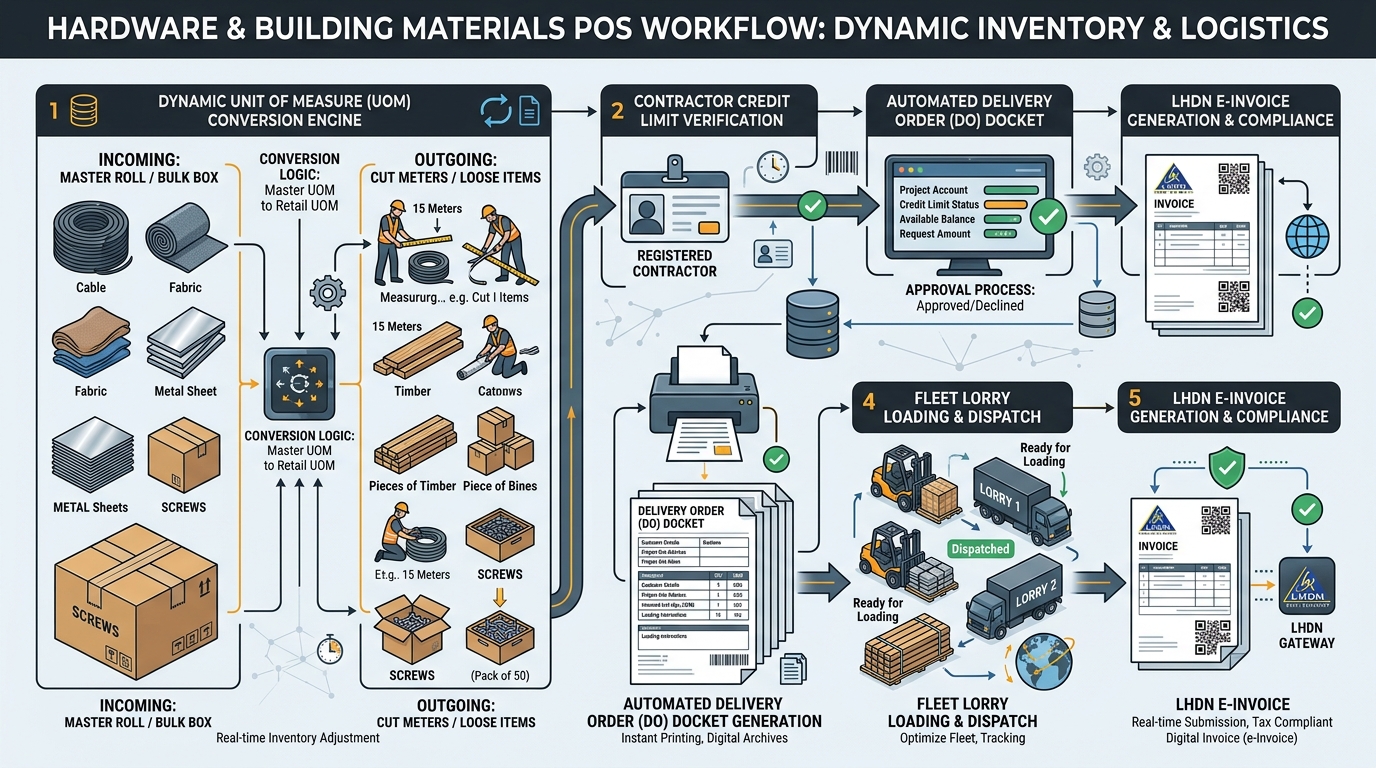
The architecture coordinates fractional conversion, credit governance, and physical yard fulfillment:
---
2. Hierarchical Unit of Measure (UOM) Tree Transformation
In GeminiPOS, continuous inventory avoids imprecise floating-point representations by storing stock in the smallest atomic integer base unit (e.g., millimeters, grams, or individual units), while exposing dynamic conversion factors to the POS user interface:
---
3. Contractor Line of Credit Mutex & Race Condition Prevention
Contractors frequently send multiple purchasing agents to different branch stores or checkout registers simultaneously. To prevent overdrafts past approved credit ceilings, GeminiPOS executes row-level mutual exclusion locking during credit authorization:
---
4. Delivery Order (DO) Docket Staging & Offline Fleet Dispatch
Physical hardware fulfillment often separates POS billing from warehouse yard fulfillment:
- Two-Phase Commit (Order vs Dispatch): When an order is tendered with a 'Lorry Dispatch' delivery type, GeminiPOS creates a
DELIVERY_ORDERentity inPENDING_DISPATCHstatus. - Offline Mobile Picker Sync: Yard operators using rugged Android scanners sync active DO manifests over local Wi-Fi or PowerSync.
- Cryptographic Proof of Delivery (e-PoD): Upon arriving at the job site, the recipient signs the mobile tablet. The signature vector and GPS coordinates are hashed into an immutable audit packet and synced back to the core billing ledger when connectivity is established.
This robust decoupling ensures hardware suppliers maintain complete stock accountability and zero credit losses across high-volume trade operations.