
In an era where cafes routinely double as retail roasteries, and fast-casual diners sell packaged merchandise alongside hot entrees, traditional single-rate tax registers fail to maintain fiscal compliance.
Across many fiscal jurisdictions—such as Malaysia’s Sales and Service Tax (SST) framework—tax liabilities pivot heavily on fulfillment context:
- On-Premise Consumption (Dine-In): Attracts hospitality and service tax rates.
- Off-Premise Consumption (Takeaway / Delivery): Subject to reduced or zero-rated food exemptions.
- Merchandise & Pre-Packaged Goods: Governed under standard retail sales tax schedules.
Requiring cashiers to split customer orders across separate tickets is friction-heavy and causes checkout bottlenecks. Modern POS architectures solve this through native, line-item dynamic tax splitting.
---
1. The Engineering Architecture of Dynamic Tax Splitting
!Hybrid Sales and Service Tax Engine Architecture
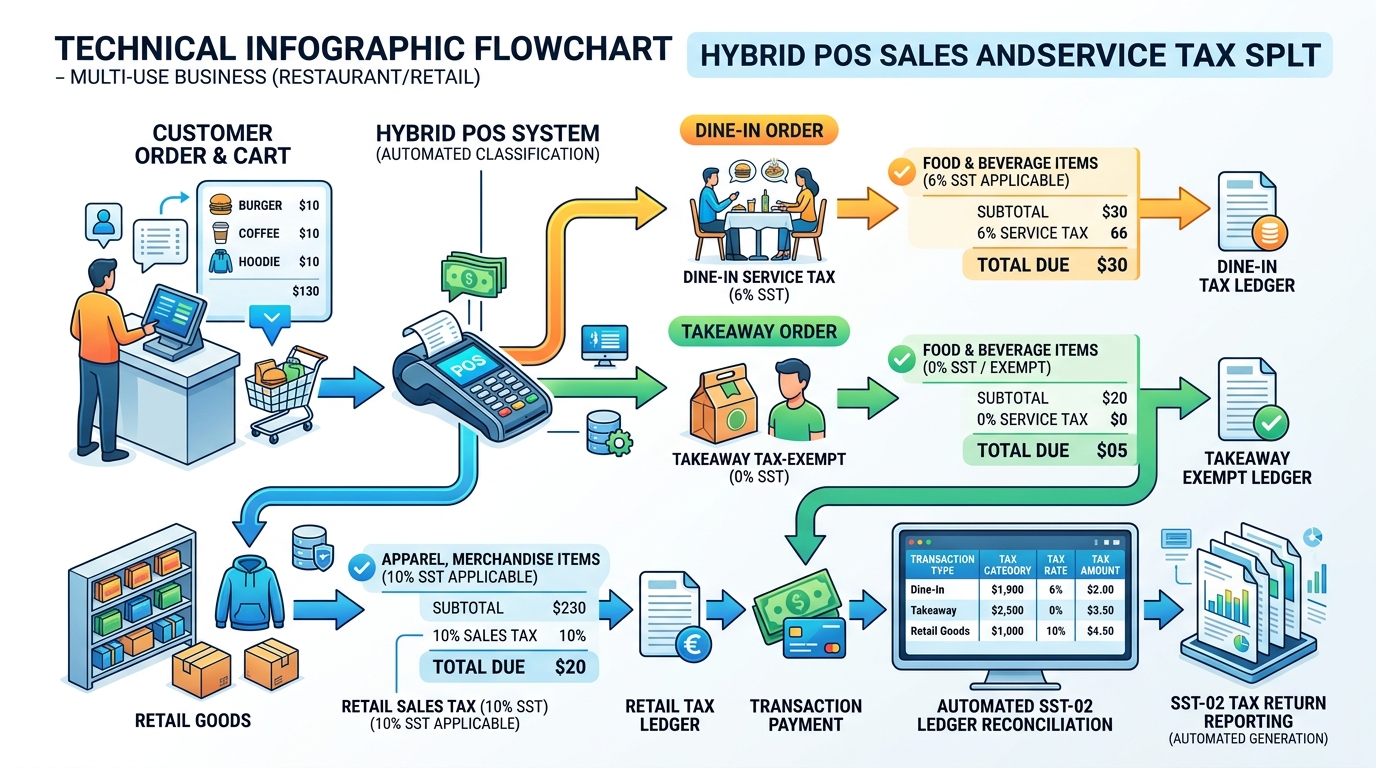
A robust commercial checkout engine must decouple item definition from operational tax classification:
- Contextual Item Tagging:
Rather than hardcoding tax percentages to product SKUs, tax calculation applies dynamically based on the active fulfillment mode tagged to each cart line item.
- Atomic Ledger Breakdown:
At transaction commitment, the checkout engine produces sub-ledger journal entries attributing taxable bases to discrete fiscal categories (e.g., *Service Taxable*, *Exempt Food*, *Retail Goods*).
- Itemized Audit Receipts:
The customer invoice clearly delineates which items incurred service duties versus zero-rated off-premise items, establishing consumer trust and meeting fiscal printing requirements.
---
2. Eliminating Retrospective Tax Audit Exposure
Manual spreadsheet reconciliations for bi-monthly or quarterly fiscal filings inevitably produce calculation mismatches:
- Erroneously levying service taxes on exempt takeaway products invites regulatory consumer protection scrutiny.
- Under-reporting dine-in service turnover exposes merchants to retroactive back-taxes and statutory penalties.
With GeminiPOS:
- Every completed transaction automatically updates categorized ledger accounts.
- Merchants can export verified statutory tax returns with zero manual arithmetic, ensuring continuous audit readiness.
---
3. Local-First Reliability with Scalable Compliance
Tax calculation engines must remain 100% operational regardless of internet connectivity.
GeminiPOS provides:
- Complete offline capability that maintains full tax splitting accuracy during connectivity dropouts.
- Direct synchronization with national e-invoicing and tax clearance backends.
- Scalable multi-terminal deployment on cost-effective Android hardware.
Experience modern point-of-sale fiscal engineering with GeminiPOS today!