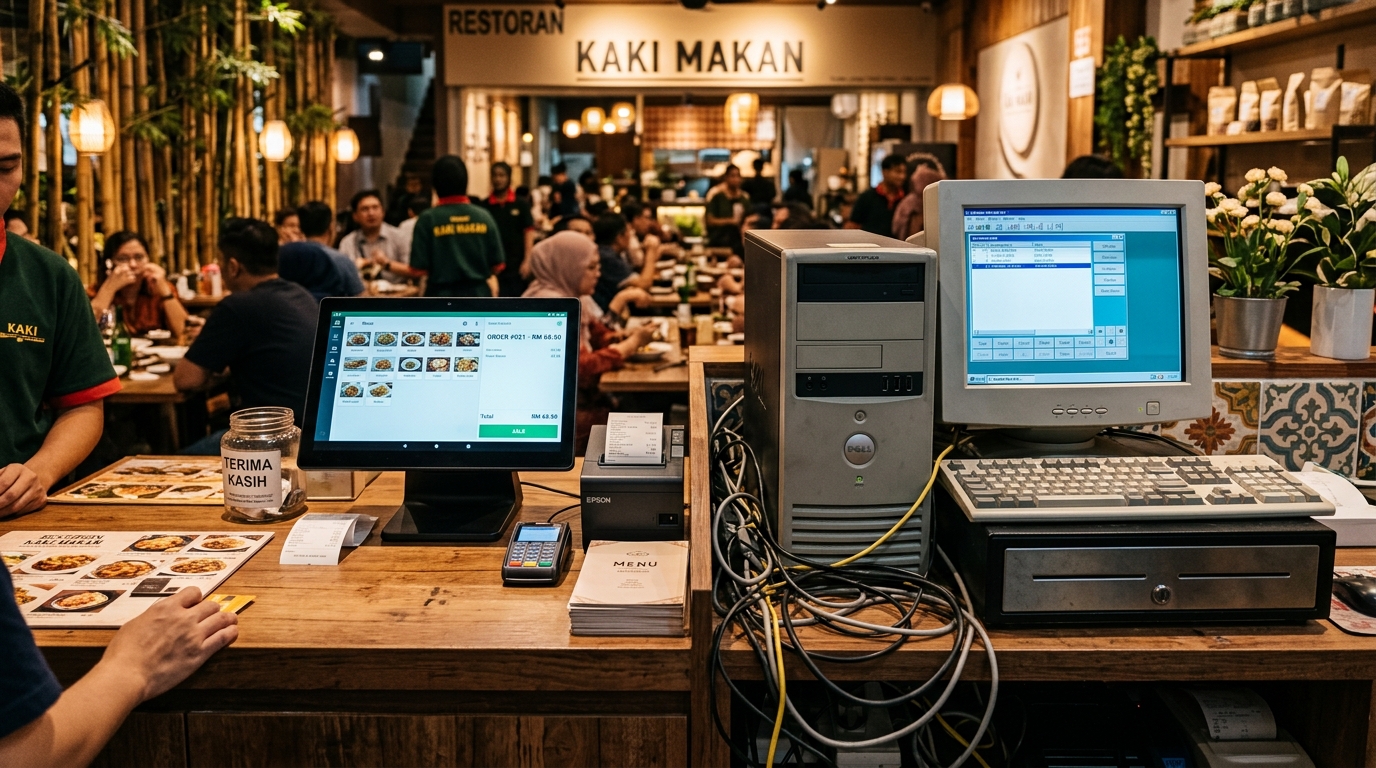
For decades, restaurant and hospitality point-of-sale systems followed a monolithic paradigm: a centralized Windows desktop tower placed under the cashier counter acting as a local database server, connected to dumb terminals and serial receipt printers.
Fast forward to 2026, and this architecture has become a liability. Operators are saddled with exorbitant annual software renewal fees, high repair costs for aging PC motherboards, and catastrophic downtime whenever the primary server reboots or encounters database file corruption.
The modern industry standard has transitioned decisively toward Decentralized Local-First Android POS Architectures.
---
1. Architectural Matrix: Legacy Client-Server vs Modern Local-First
!Legacy Windows PC System vs GeminiPOS Android Local-First Architecture
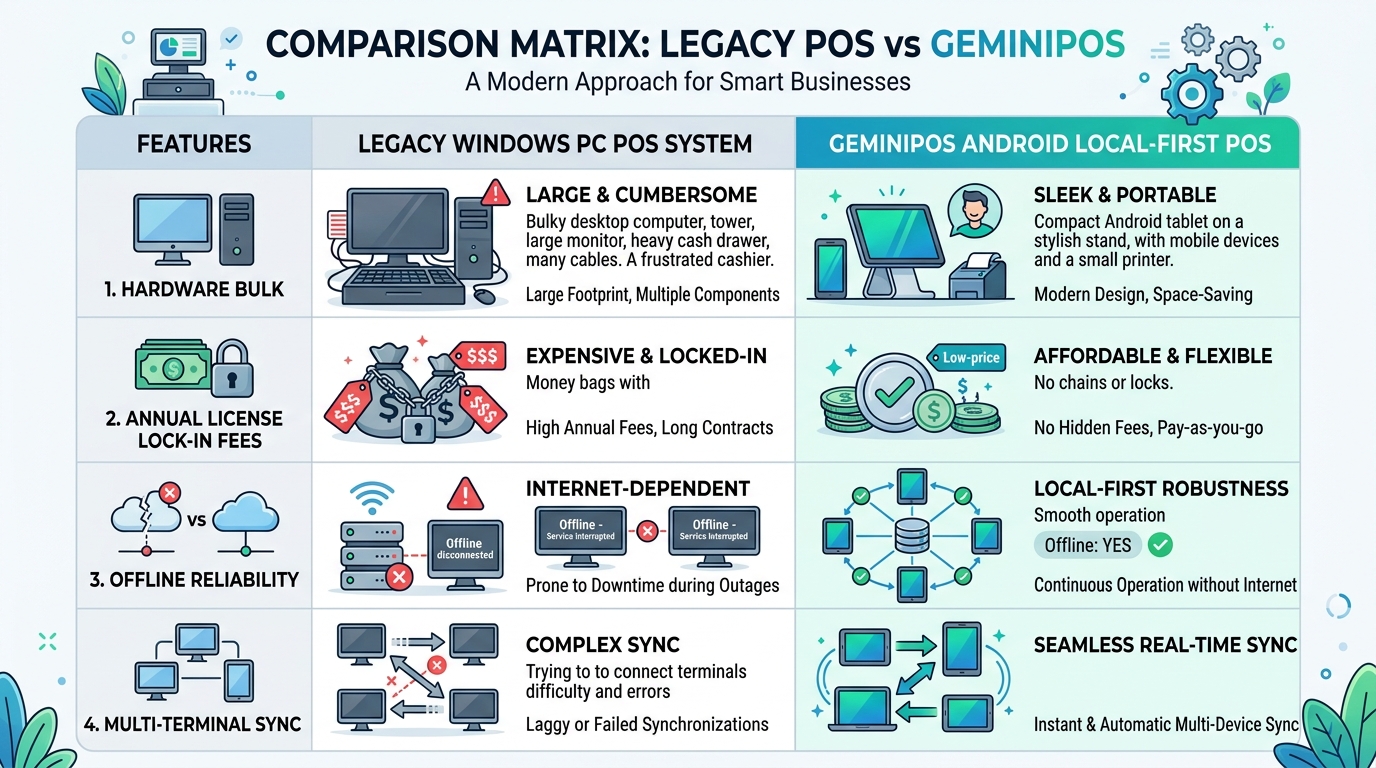
Operational Metric · Legacy Windows Client-Server · Modern Android Local-First (GeminiPOS)
System Architecture · Central desktop PC acts as local server · Decentralized peer mesh with embedded local databases
Hardware Overhead · Large desktop CPU, bulky monitor, tangles of wires · Compact, energy-efficient commercial Android touchscreens
Fault Tolerance · Zero: if central PC server crashes, all stations die · High: every terminal operates independently; zero downtime
Total Cost of Ownership · High upfront hardware + steep annual maintenance fees · Cost-effective commercial hardware + transparent licensing
Mobile Waiter Extension · Proprietary expensive handheld terminals · Any modern Android smartphone or tablet
Maintenance Burden · Windows OS patches, antivirus overhead, fan dust cleaning · Instant mobile app updates via automated cloud sync
---
2. Why the Monolithic PC POS Architecture Fails in High-Volume Dining
- The Single-Point-of-Failure Disaster:
When a traditional PC server experiences a disk crash, power surge, or background Windows update mid-service, the entire restaurant freezes. Waiters cannot enter tickets, bar printers stop firing, and cashiers are reduced to pen-and-paper tallying.
- The Annual Renewal Extortion:
Legacy POS vendors often trap merchants in high-cost multi-year maintenance agreements. If an operator declines to pay thousands of dollars in renewal fees, license dongles expire or software patches are withheld.
- Countertop Real Estate Monopolization:
Desktop towers, unwieldy keyboard trays, and separate CRT/LCD monitors consume massive amounts of front-counter space that could otherwise be utilized for impulse merchandising or customer interaction.
---
3. The Local-First Android Paradigm: GeminiPOS
By leveraging Android's low power consumption, resilient embedded SQLite storage, and lightweight background sync engines, GeminiPOS provides:
- Bulletproof Resilience: Even during complete internet blackouts, stations continue ringing up sales and printing kitchen tickets locally.
- Hardware Freedom: Run on purpose-built point-of-sale hardware (iMin, Sunmi) or commercially available tablets without proprietary handcuffs.
- Zero Software Lock-In: Transparent, operator-first pricing without artificial annual renewal penalties.
Modernize your dining infrastructure. Switch to GeminiPOS today!