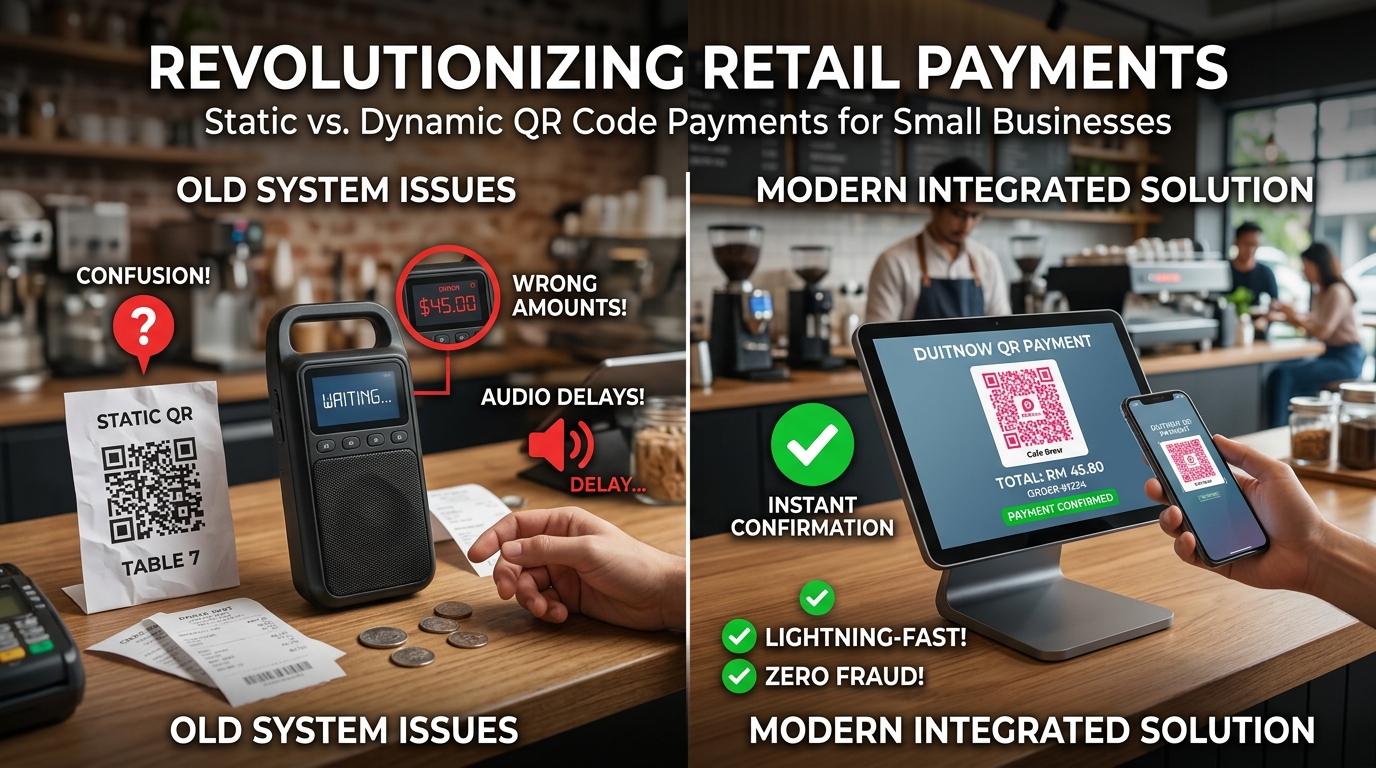
"Why are high-velocity retail merchants discarding battery-powered payment soundboxes in favor of integrated dynamic QR customer displays?"
During the initial expansion of national QR payment rails (such as India's UPI, Brazil's Pix, and Southeast Asia's DuitNow/PromptPay), standalone cellular "soundboxes" became ubiquitous.
These micro-appliances—consisting of a cellular modem, speaker, and basic MCU—read out payment confirmations aloud to alert counter staff against counterfeit transaction screenshots.
While useful for street vendors, soundboxes present severe architectural and operational bottlenecks in high-volume retail and hospitality environments.
Here is an engineering analysis of Acoustic Soundboxes versus Synchronous Customer-Facing Dynamic QR Displays.
---
1. The Vulnerabilities of Static QR + Acoustic Verification
Deploying disconnected audio soundboxes introduces three structural flaws:
- Manual Amount Entry Errors: The soundbox pairs with a printed Static QR code. The consumer manually keys in the payable amount into their mobile banking application. In peak rush conditions, under-keying errors (e.g. typing $4.50 instead of $45.00) create rampant uncollected revenue.
- Auditory Masking: Commercial kitchens and espresso bars produce 75–85 dBA of ambient noise. Ambient decibels routinely drown out the soundbox chime, forcing cashiers to pause service and verify notifications visually.
- Cellular Telemetry Overhead: Standalone soundboxes require ongoing cellular IoT subscriptions ($3 to $8 per device per month), introducing recurring OpEx across enterprise multi-store footprints.
---
2. Dynamic QR Architecture: Synchronous Cart Locking
!Architectural schematic contrasting static acoustic payment flows with synchronized dynamic QR loops
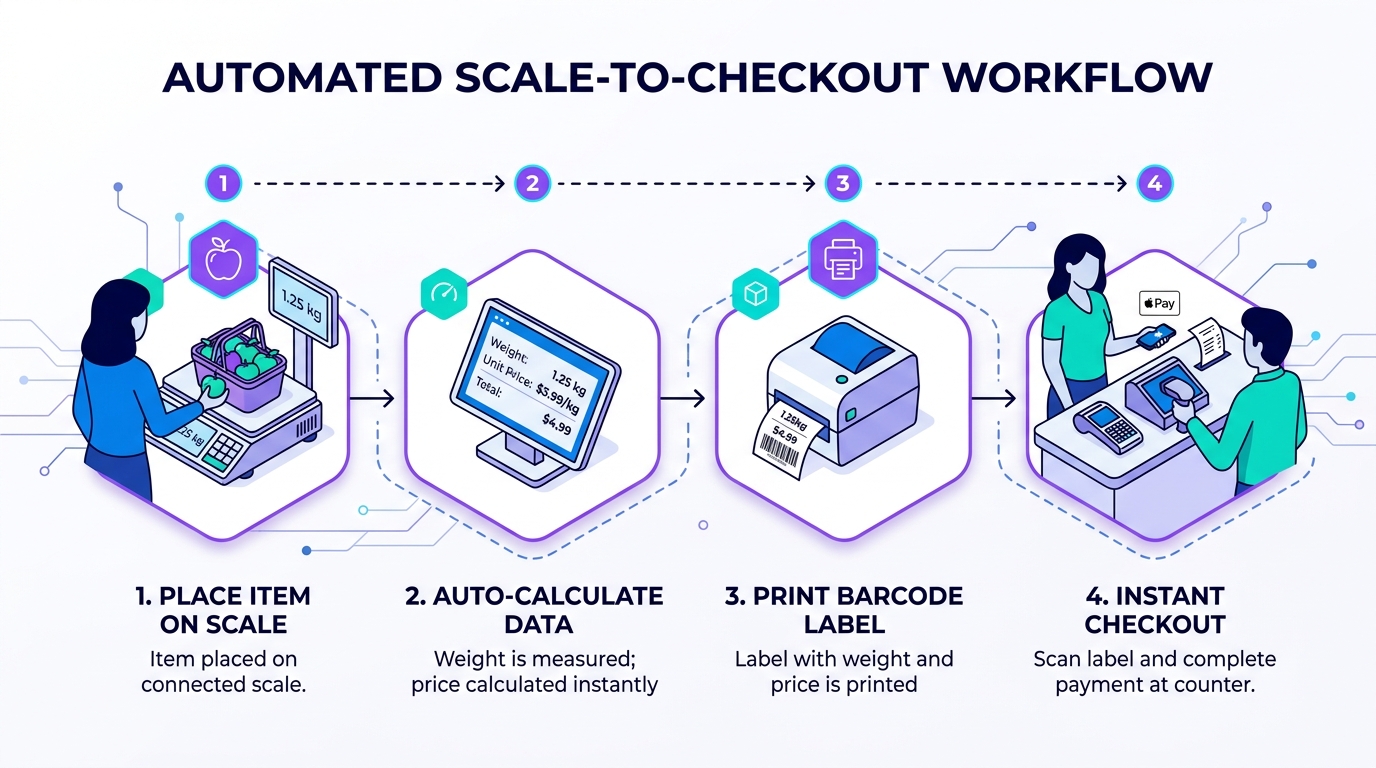
Platforms like GeminiPOS implement native Customer-Facing Display (CFD) synchronization:
- Dynamic Payload Generation: The POS encrypts the exact transaction total, merchant ID, and unique invoice nonce directly into an ephemeral QR code rendered on the customer screen.
- Zero Consumer Data Entry: The consumer simply scans and authorizes the payment. The amount cannot be modified by the buyer.
- Synchronous Hardware Interlocking: Upon clearance confirmation from the payment rail, the POS automatically triggers the thermal receipt cut and kitchen dispatch with zero operator intervention.
---
3. The Enterprise Paradigm Shift
By eliminating the recurring hardware lease and cellular carrier costs of auxiliary soundboxes, retail operators achieve higher transaction velocity and complete immunity to customer under-keying fraud.
Explore how GeminiPOS powers seamless, zero-subscription dual-screen retail checkouts.