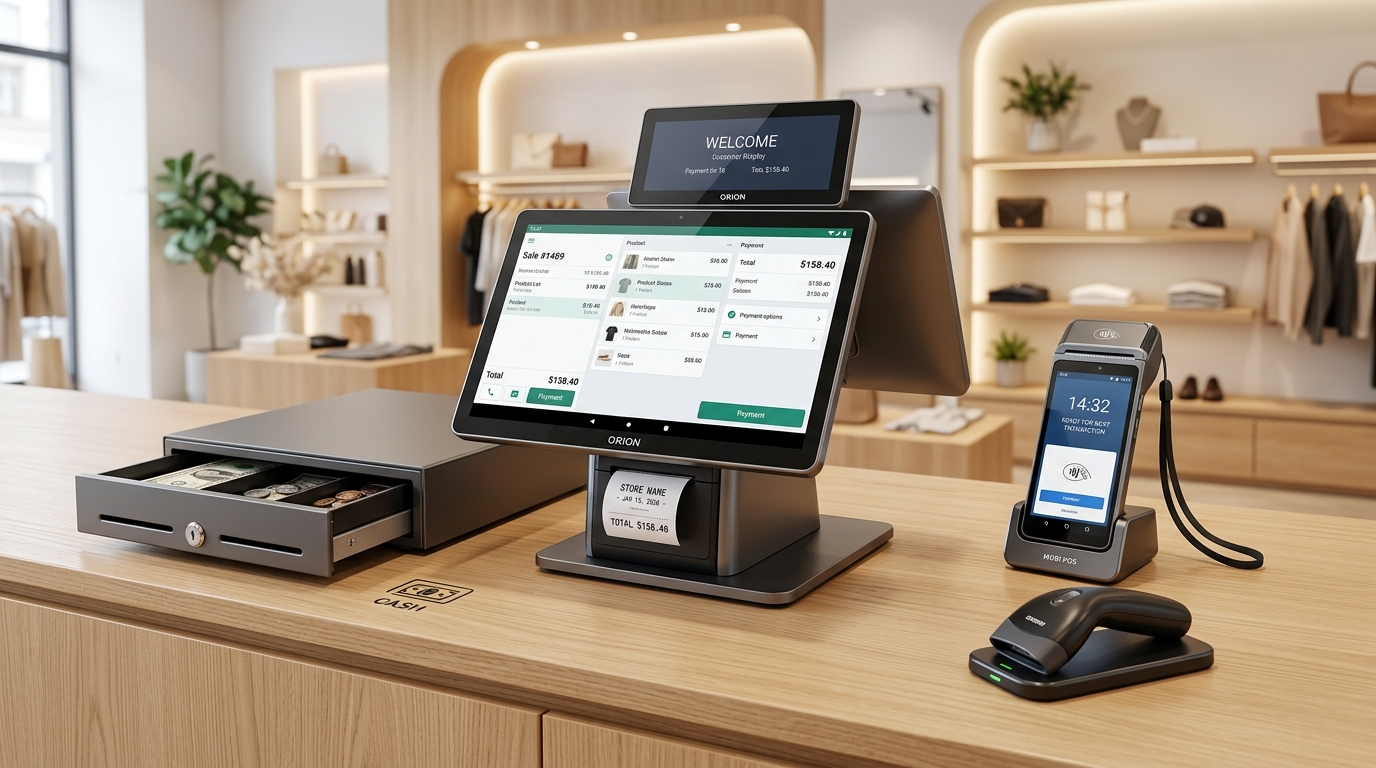
"Why do multi-location retail enterprises and high-velocity hospitality operators increasingly abandon Apple iPads in favor of dedicated commercial Android workstations?"
In the early 2010s, consumer tablet adoption disrupted cumbersome Windows legacy registers. Tablets promised sleek aesthetics and lower initial purchase costs.
A decade later, empirical lifecycle data tells a vastly different story. When evaluated across a 36-month operational deployment horizon, the consumer iPad generates significant hidden maintenance overhead, frequent hardware failure points, and peripheral fragility.
Here is a technical analysis of POS Total Cost of Ownership (TCO), evaluating consumer iOS hardware against purpose-built commercial Android point-of-sale systems.
---
1. Capital Expenditure vs Operational Expenditure Breakdown
Consumer tablets require extensive peripheral adaptation to function as point-of-sale stations:
Cost Component (Per Lane) · Apple iPad Consumer Setup · Commercial Android All-in-One
Primary Compute / Display · $399 (iPad 10th Gen 64GB) · Integrated Unit ($450)
Mounting Stand & Enclosure · $120 (Locking metal swivel) · Built-in Heavy Base ($0)
80mm High-Speed Thermal Printer · $250 (External LAN/Bluetooth) · Built-in Auto-cutter ($0)
Customer-Facing Display (CFD) · $180 (Secondary tablet/mount) · Built-in Dual Screen ($0)
Peripheral Hubs & Cabling · $65 (Power delivery splitter) · Internal Circuitry ($0)
Initial Capex Total · $1,014 · $450 (~55% Savings)
---
2. Hardware Failure Modes in Commercial Environments
!36-Month Failure Rate and Replacement Analysis: Consumer Tablet vs Industrial POS
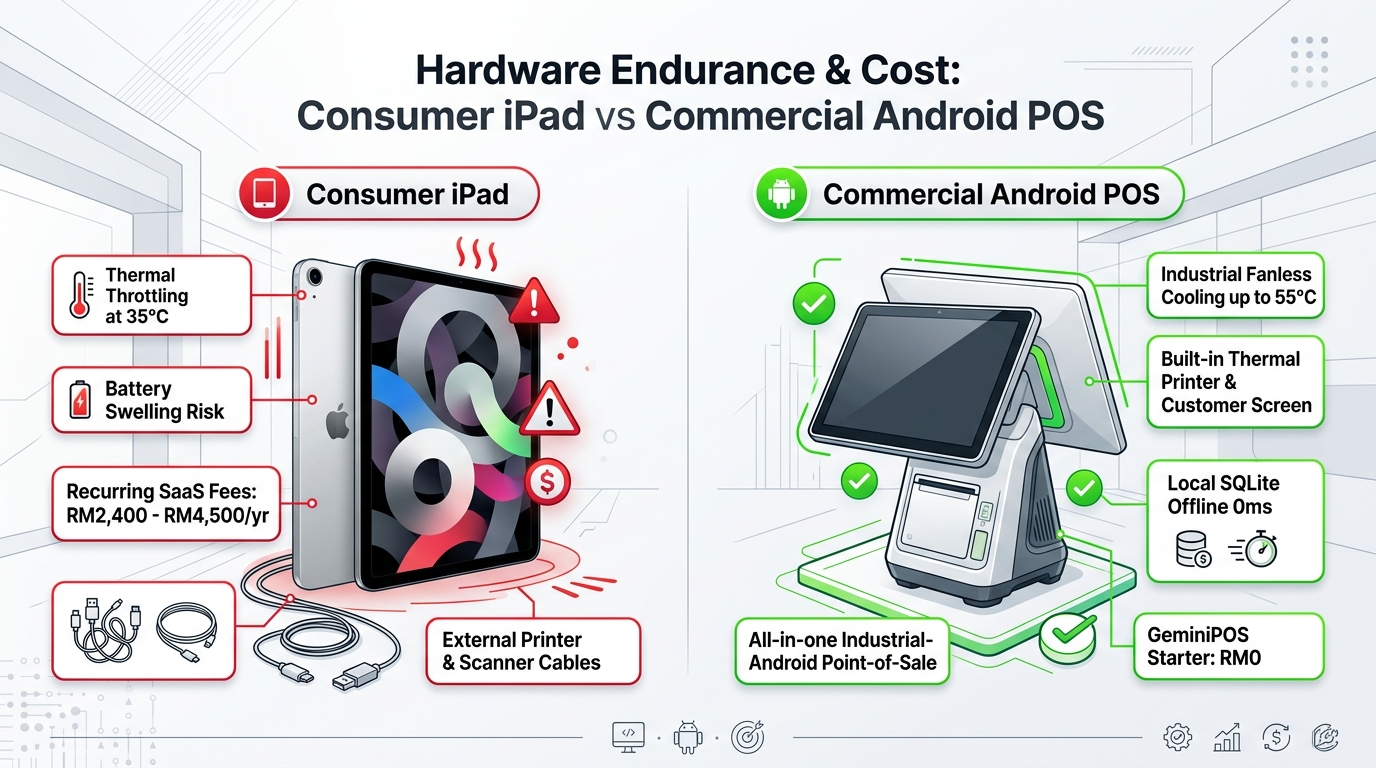
The core operational liability of consumer tablets lies in design intent:
- Lithium Battery Swelling & Thermal Derating: Consumer iPads utilize pouch-cell lithium batteries that degrade under permanent 100% trickle-charge conditions. In warm kitchen passes or retail checkout bays, electrolyte vaporization leads to battery swelling, pushing the display panel out of alignment and triggering catastrophic failure within 18–24 months.
- Peripheral Interconnect Vulnerability: Consumer USB-C/Lightning ports are not designed for physical strain. Cashier movements repeatedly torque external hub cables, causing intermittent disconnects during receipt printing and barcode scanning.
- Industrial AC Power Architecture: Commercial Android terminals feature battery-less, AC-direct industrial power converters with internal surge suppression, operating reliably across 5–7 continuous operating years.
---
3. Peripheral Interoperability and Software Freedom
Modern retail automation demands deep physical device integration:
- Direct Serial & Weight Scale Drivers: Purpose-built Android workstations incorporate native RS232, RJ11, and RJ45 ports. Weight scales and cash drawers trigger via hardware interrupts without requiring network translation bridges.
- Open Application Deployment: Android allows organizations to deploy and manage enterprise applications directly, avoiding consumer App Store gatekeeping and ecosystem subscription lock-in.
GeminiPOS delivers enterprise-grade retail and F&B workflows on open Android architecture. Discover GeminiPOS today to minimize your counter TCO.