When launching a new retail boutique, cafe, specialty grocery, or modern dining venue in 2026, one of the earliest capital expenditure allocations is your front-of-house checkout infrastructure: "Which POS hardware architecture should I buy?"
The commercial market presents a bewildering array of hardware form factors:
- Reconditioned Windows desktop PCs with a maze of exposed cabling beneath the counter.
- Consumer Apple iPads mounted in expensive third-party steel stands.
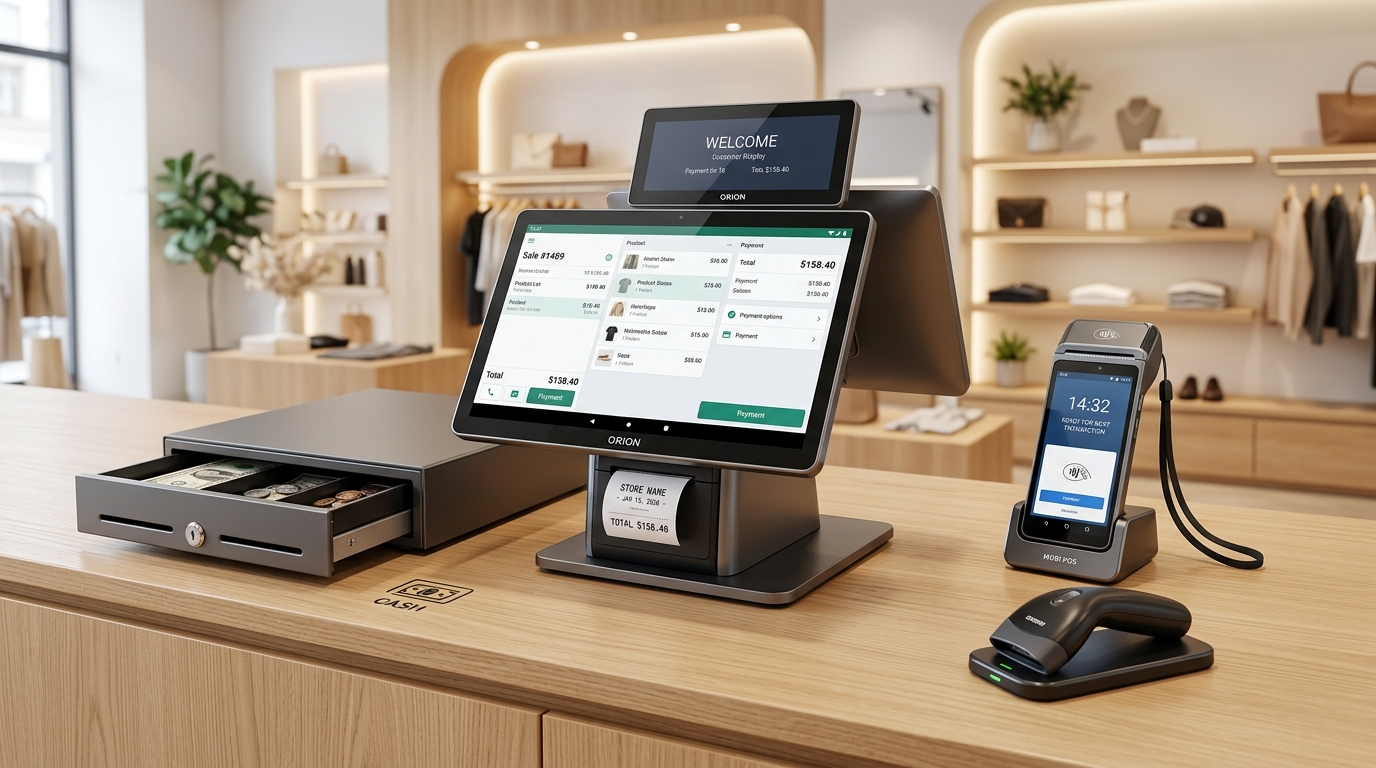
- Commercial all-in-one dual-screen Android touch terminals (such as iMin Swan or Sunmi D4 series) featuring integrated high-speed thermal printers.
- Pocket-sized mobile handheld POS terminals.
Purchasing incompatible hardware introduces chronic operational friction: consumer batteries bulging under continuous heat, messy counter clutter that alienates guests, and peripheral driver incompatibilities that disrupt peak-hour sales.
This guide delivers an empirical architectural comparison across the three dominant POS hardware categories to ensure you maximize your hardware return on investment (ROI).
---
1. The Three Dominant POS Hardware Architectures
Here is an architectural comparison of modern commercial checkout setups:
!2026 POS Hardware Architecture Comparison Diagram
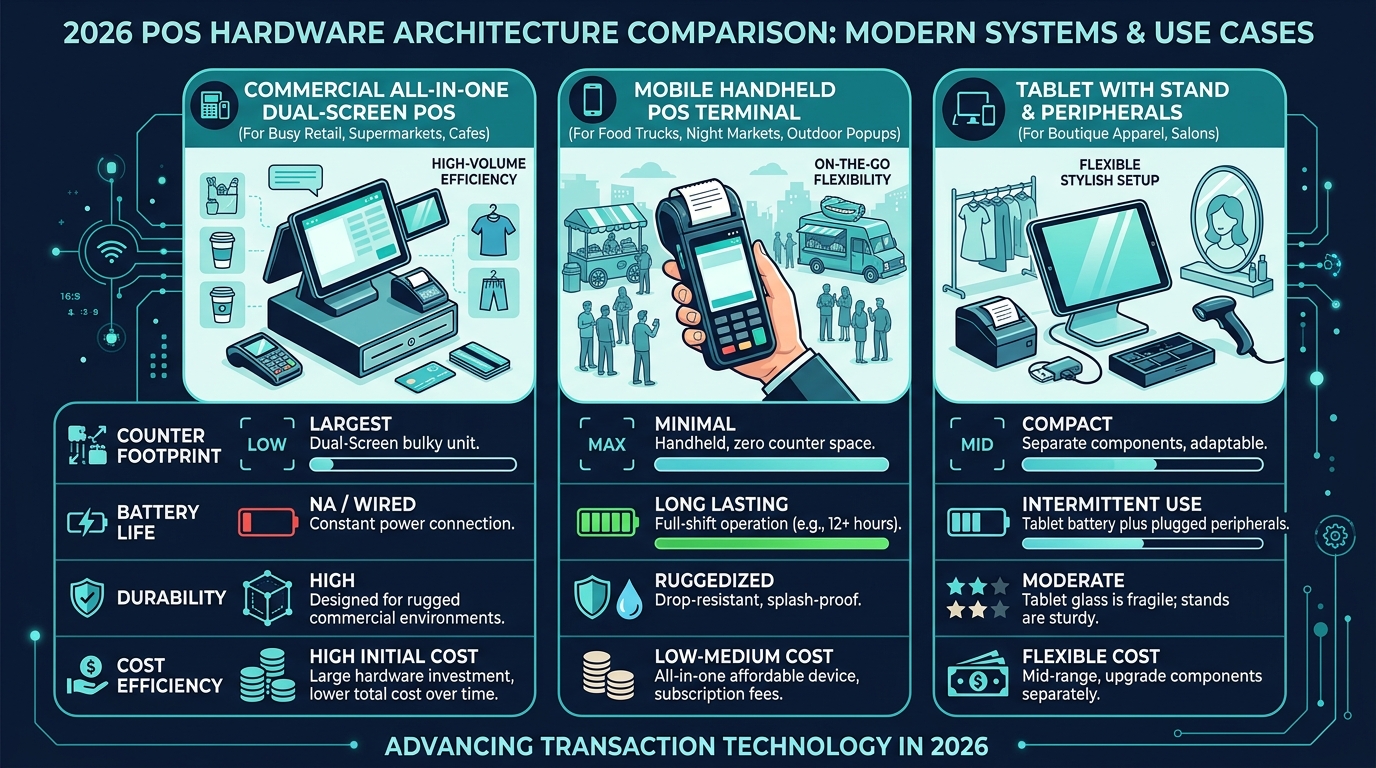
A. Commercial Android All-in-One Dual-Screen Terminals (e.g., iMin Swan)
- Architecture: Purpose-built commercial touch terminal. Features a primary 15.6-inch capacitive glass touchscreen, high-speed integrated 80mm thermal receipt printer with auto-cutter, and a secondary Customer-Facing Display (CFD).
- Ideal Deployment: High-throughput retail, supermarkets, cafes, quick-service dining, and convenience stores where checkout speed, cable management, and counter durability are paramount.
B. Mobile Handheld POS Terminals
- Architecture: Compact battery-powered handheld unit (12+ hours continuous operation), featuring high-speed 58mm thermal receipt printing and integrated barcode camera engines.
- Ideal Deployment: Night markets, food trucks, pop-up events, curbside pickup, and mobile field services requiring total portability.
C. Consumer Tablet (iPad) with Enclosure Stands
- Architecture: Sleek consumer tablet paired with external bolt-on peripherals: swivel stand, separate desktop receipt printer, cash drawer, and multiple auxiliary power bricks.
- Ideal Deployment: Aesthetic luxury fashion boutiques, salons, spas, and designer showrooms where mobile roaming aesthetics outweigh heavy-duty grease/dust durability.
---
2. Total Cost of Ownership (TCO) Comparison
A realistic financial projection of complete operational hardware bundles:
Evaluation Metric · Commercial Android All-in-One · Consumer iPad Bundle · Legacy Windows PC Setup
Initial Hardware Outlay · Moderate ($450 - $700) · High ($850 - $1,300) · Moderate ($500 - $800)
Thermal Receipt Printer · Integrated ($0 Extra) · External Purchase (+$150) · External Purchase (+$120)
Customer-Facing Display · Integrated Secondary Panel · Cost-Prohibitive 2nd iPad · External Bulky Monitor
Heat & Grease Resistance · Industrial High · Low (Thermal Throttling) · Low (Dust-Prone CPU Fans)
Cable Management · Single Consolidated Power Lead · 4 - 5 Entangled Cables · 6 - 8 Cluttered Cables
---
3. Four Vital Pre-Purchase Architectural Checks
Before executing a commercial hardware procurement order:
- Receipt Paper Dimensions (80mm vs 58mm):
High-density checkouts and restaurants issuing itemized receipts, dynamic DuitNow QR codes, and compliance data require wide 80mm thermal formats to prevent awkward text truncation.
- Industrial Peripheral Connectivity:
Confirm hardware natively houses dedicated RS232 serial ports, RJ45 Ethernet, RJ11 cash drawer kicks, and powered USB ports for direct scale and scanner integration.
- Thermal Longevity & 24/7 Power Management:
Consumer tablets rely on pouch lithium-ion cells prone to battery swelling when continuously connected to wall chargers in humid tropical kitchens. Commercial terminals utilize regulated direct DC power supplies engineered for non-stop multi-year reliability.
- Offline-First Software Compatibility:
Hardware capability is only as good as the software runtime it hosts. Ensure your devices run GeminiPOS—guaranteeing 100% local transaction processing during internet blackouts.
---
4. Conclusion & Strategic Recommendation
For the vast majority of retail and food & beverage merchants in 2026, Commercial Android All-in-One Dual-Screen Terminals deliver the superior balance of commercial durability, counter aesthetics, and lowest Total Cost of Ownership.
> Need expert advice on tailoring hardware to your counter layout?
> The GeminiPOS hardware engineering team provides complimentary setup consultations.
> Contact our Team or explore our Hardware Packages.
---
> 💡 Related Guide: Discover the complete feature overview, local-first offline architecture, and multi-outlet workflows of our flagship POS system in Malaysia built for modern retail and F&B businesses.