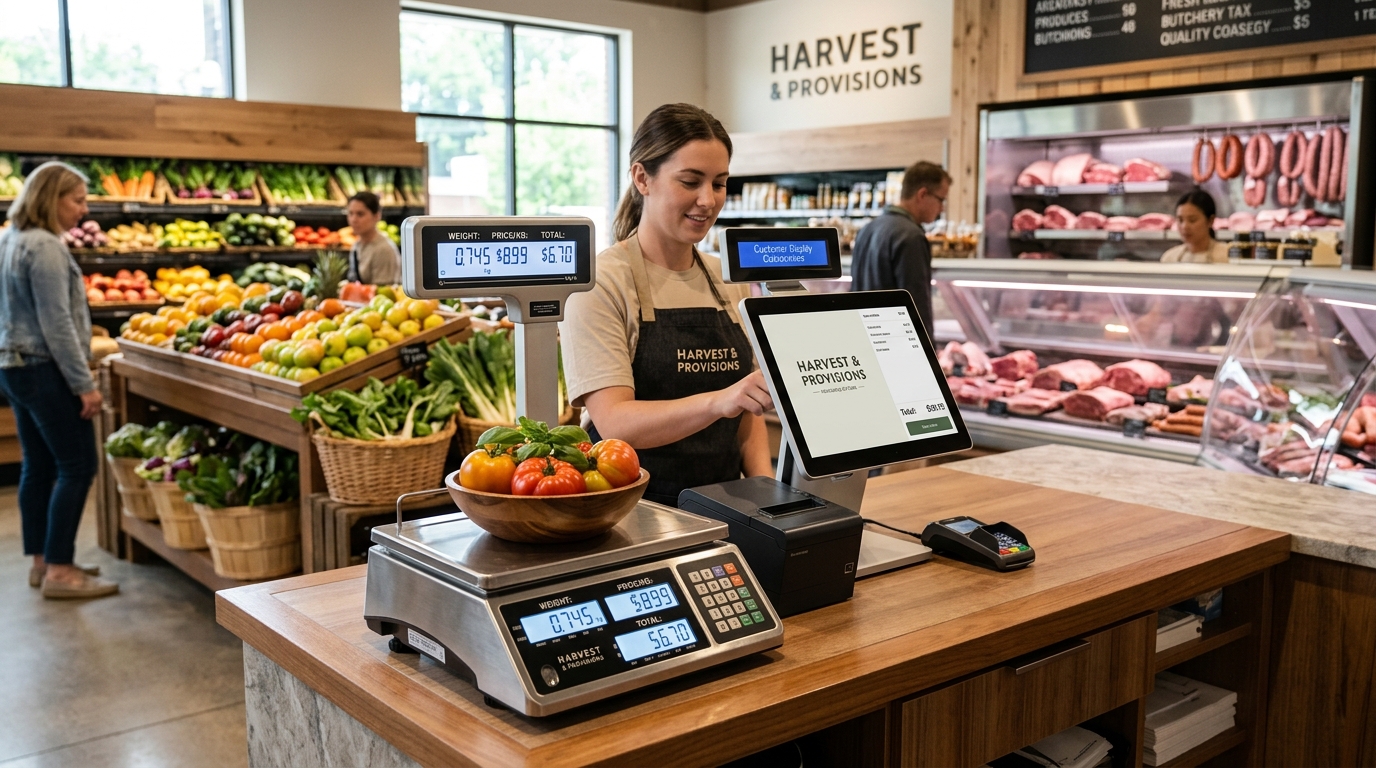
For supermarkets, artisan butcher shops, organic farm stands, and bulk-food grocers, inventory management is defined by variable-unit goods. Unlike boxed or canned items sold under fixed universal product codes (UPCs), fresh produce, deli cuts, and seafood are sold by catch weight—meaning every physical package has a unique weight and calculated price.
When retail operations attempt to sell catch-weight merchandise without dedicated POS scale integration, checkout counters bottleneck. Cashiers must read values off standalone scale screens, manually enter prices, or look up PLU codes across paper flip-charts.
This friction not only prolongs customer wait times but also introduces persistent margin leakage through human data-entry mistakes.
Watch: two ways to sell by weight in GeminiPOS (weight labels and a counter scale).
Selling by Weight? 2 Ways with GeminiPOS
---
1. Core Architectural Models for Scale Integration
Modern retail technology utilizes two primary models to automate catch-weight transactions:
A. Integrated Checkout Counter Scale (Live Scale Feed)
Direct physical integration connects a commercial-grade scale platform to the POS terminal via USB, Serial RS232, or high-reliability Bluetooth:
- The cashier places the unpackaged item on the scale platform.
- The POS terminal reads weight changes instantaneously.
- The cashier selects the product via touchscreen tiles or rapid PLU lookup.
- Total price calculates in real time according to the verified live weight, preventing cashier transcription errors.
B. Pre-Pack Scale with Embedded Barcode Labeling
For merchandise portioned before arrival at the front checkout counter (e.g. pre-cut cheese, marinating meats, or deli tubs):
- Employees weigh and package items in prep rooms using dedicated scale-printers.
- The scale prints an adhesive label with an embedded-price or embedded-weight barcode (typically adhering to GS1 DataBar or standard UPC/EAN formats prefixed with
02or20-29). - When the customer arrives at the checkout counter, scanning the label automatically decomposes the code into the item's SKU, price, and net weight.
---
2. The Integrated Scale-to-Checkout Architecture
Here is the operational process from weighing station to completed sale:
!Automated Scale to Checkout Workflow Diagram
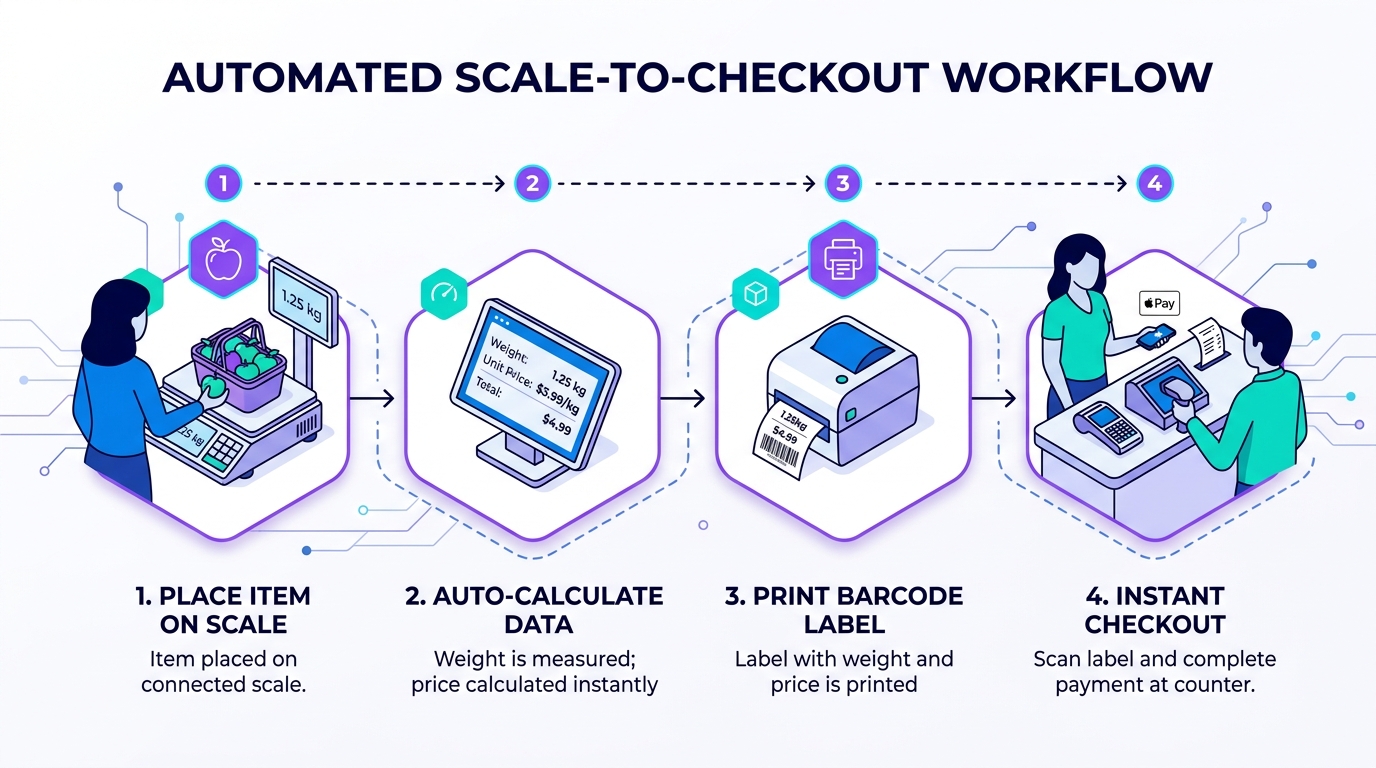
- Place Item on Scale: Fresh produce or butchery portions rest on the certified scale surface.
- Auto-Calculate Data: The register captures calibrated weight and computes gross totals without manual typing.
- Print Barcode Label: Prep-station scale printers generate machine-readable price-weight labels.
- Instant Checkout: Cashiers scan pre-pack labels or accept live scale totals, clearing transactions in seconds.
---
3. Legal Metrology and Weights & Measures Compliance
In nearly every global regulatory jurisdiction (including NIST Handbook 44 in the United States, OIML international recommendations, and regional metrology directives), commercial scales must satisfy rigorous trade-legal certification:
- NTEP / OIML Certification: Any scale used to establish consumer transaction prices must be tested, sealed, and approved by metrological authorities.
- Customer Visibility Mandate: Regulatory standards require that consumers can easily observe the gross, tare, and net weights during the transaction. POS systems must support secondary customer-facing displays.
- Audit Trails: Software must properly record transaction weight metadata to support regulatory inspections and tax reporting.
---
4. Why GeminiPOS Leads in Catch-Weight Retail
GeminiPOS delivers enterprise-tier weighing capabilities on accessible mobile Android hardware:
- Universal Embedded-Barcode Parsing: Natively decodes variable weight and price barcodes produced by industry-standard deli scales.
- Commercial Peripheral Support: Compatible with commercial scale platforms and multi-function Android touch registers from leading hardware makers (iMin, Sunmi).
- Offline-First Architecture: Even if cloud connectivity is lost during severe weather or internet drops, the register continues to communicate locally with the scale, scan barcodes, and complete checkout smoothly.
---
5. Conclusion & Next Steps
Integrating digital scales into your retail POS eliminates counter delays, safeguards your legal compliance, and stops the silent revenue drain of manual cashier mistakes.
> Ready to modernize your grocery, butchery, or produce operations?
> Discover how GeminiPOS scales with your retail business.
> Learn About Inventory Management or Explore Transparent Plans.