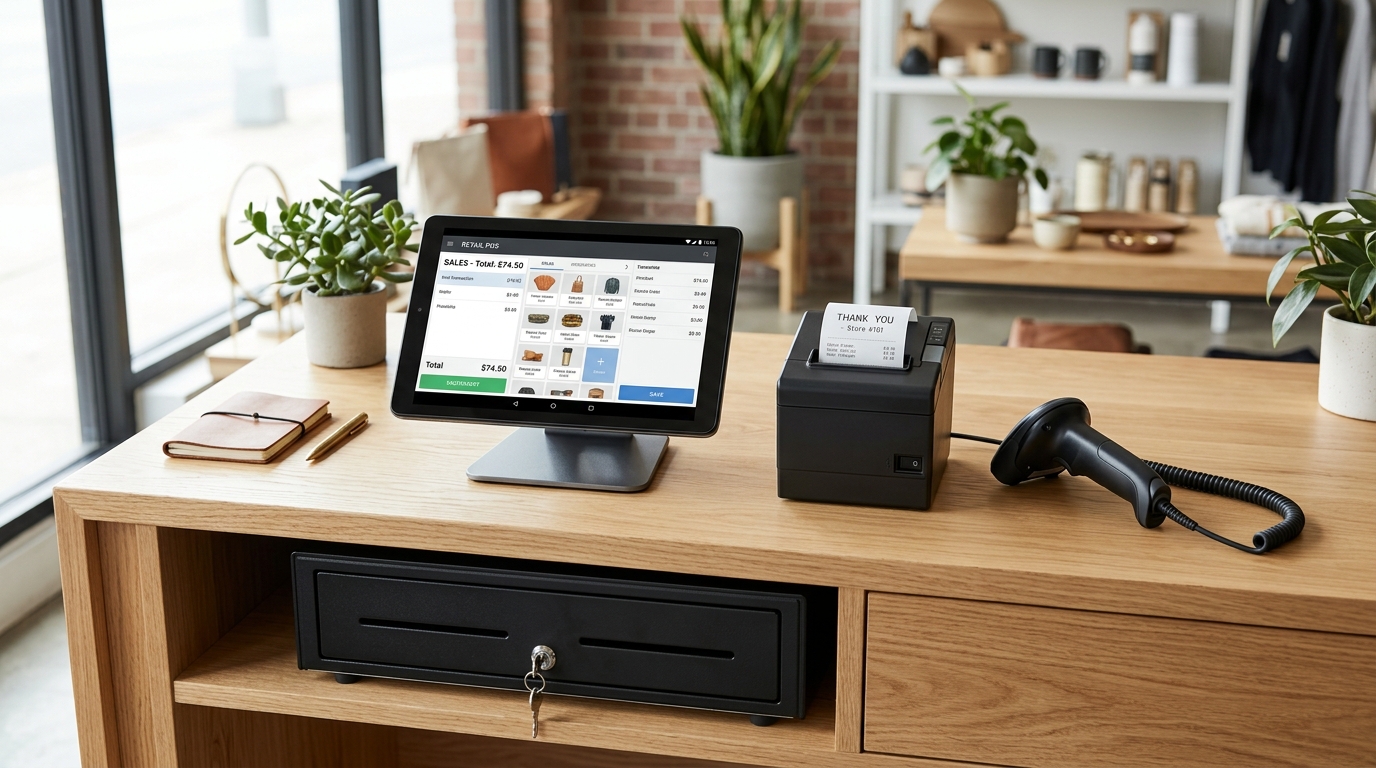
For retail and fast-casual operators, scaling from an initial flagship location to multiple stores represents a fundamental shift in business mechanics. In a single store, an owner can visually inspect shelves and personally verify the cash drawer. Across three, five, or ten locations, visual oversight is impossible. Without a synchronized multi-store POS and inventory engine, operations fracture into inventory guesswork, stockouts, and unmonitored margins.
This guide details the architectural principles and operational workflows required to manage multi-location retail inventory with real-time accuracy and zero checkout interruption.
---
1. The Anatomy of Multi-Location Inventory Friction
When retailers expand their physical footprint, three systemic challenges inevitably surface:
Stock Imbalances and Working Capital Traps
Without cross-store stock visibility, Store A frequently turns away customers due to a stockout on a bestseller, while Store B holds excess units gathering dust. Unbalanced inventory ties up operating capital in stagnant inventory while missing high-intent sales.
Phantom Inventory from Unaudited Inter-Store Transfers
Moving inventory between stores without an immutable digital chain of custody creates "phantom inventory"—stock that exists on a spreadsheet but is nowhere to be found on the sales floor. When goods are lost in transit or miscounted upon receipt, your shrink rate climbs.
Counter Halts from Brittle Cloud Architecture
Cloud-only multi-store POS systems often depend on constant internet connectivity to validate stock and record sales. If an outage hits Store C during a Saturday rush, cashiers cannot ring up purchases, resulting in walkouts and damaged customer trust.
---
2. Best Practices for Modern Multi-Store Inventory Architecture
To maintain inventory integrity across distributed storefronts, modern retailers implement three foundational rules:
A. Centralized Master Catalog with Distributed Stock Nodes
Maintain product masters (SKUs, barcodes, tax classes, descriptions, and base prices) in a single cloud source of truth. Each retail location operates as a dedicated inventory node that holds its own distinct stock levels, reorder points, and location-specific cost allocations.
B. Standardized Transfer Orders (TO) with Dual Verification
Every inventory movement between locations must follow a strict three-state lifecycle:
- Dispatched: Origin facility scans and packs the items. Stock is decremented from the source immediately.
- In Transit: Stock is held in a virtual transit bucket. It cannot be sold online or in-store, preventing double-allocation.
- Received & Reconciled: Destination facility scans the inbound shipment. Discrepancies generate automatic variance logs requiring manager sign-off.
C. Offline-First Local Data Resilience
A resilient POS runs its core catalog lookup, cart calculations, and payment acceptance on the local device database. When connectivity is interrupted, the register operates without interruption. When the connection resumes, local transaction records synchronize with the cloud hub via bidirectional conflict-resolution pipelines.
---
3. Role-Based Governance and Loss Prevention Across Branches
Expanding store counts increases human risk. Securing retail operations requires explicit permission boundaries:
- Terminal Cashiers: Restricted to counter workflows. They cannot view wholesale costs, examine corporate profit margins, modify catalog attributes, or execute unchecked price overrides.
- Store Supervisors: Empowered to execute cash drawer counts (floats, drops, and end-of-shift reconciliations) and acknowledge inbound stock transfers for their assigned location only.
- HQ Leadership: Real-time visibility into company-wide gross margins, inventory turnover velocity, and cross-store audit trails from any browser or mobile executive view.
---
4. Multi-Location Analytics: Turning Store Data into Growth
Centralized multi-store software transforms raw sales logs into actionable operational advantages:
- Velocity-Driven Stock Rebalancing: Identify regional demand variations to transfer inventory toward high-performing stores before markdowns become necessary.
- Bulk Supplier Procurement: Consolidate replenishment orders across all stores to negotiate volume discounts with distributors.
- Shrinkage Anomaly Detection: Pinpoint unexplained stock variances and pattern discrepancies between individual stores before losses compound.
---
5. Conclusion
Growth does not have to mean loss of control. By adopting an offline-ready, cloud-synchronized point-of-sale platform built for multi-outlet retail, merchants can scale with complete operational clarity and confidence.
Explore GeminiPOS multi-location inventory, offline-ready POS architecture, and our scalable pricing plans.