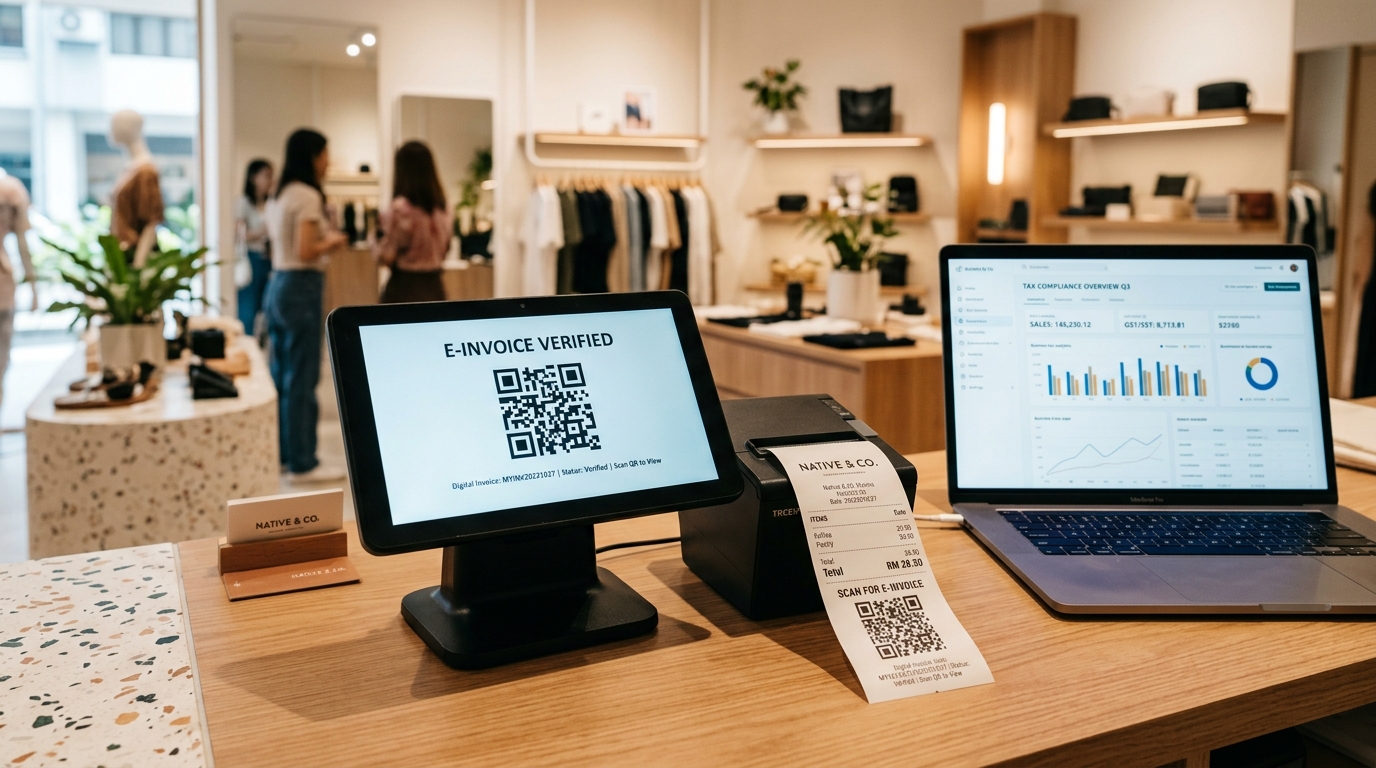
Across the globe, tax authorities are aggressively moving toward Continuous Transaction Controls (CTC) and mandatory digital fiscalization. From European VAT compliance and Latin American electronic invoicing to Southeast Asia's real-time tax mandates, governments are closing the tax gap by digitizing the point of sale.
For retailers, restaurants, and hospitality brands, this presents an acute operational risk: How do you validate fiscal data with a tax authority without turning a 15-second counter checkout into a 2-minute line bottleneck?
Here is how modern, cloud-native POS architecture solves real-time compliance while preserving maximum checkout throughput.
---
The Flaw of Synchronous Fiscalization
In traditional or poorly designed cloud systems, fiscalization is implemented as a synchronous API call right in the middle of payment processing:
- Cashier totals the cart.
- The POS calls the tax authority API and waits.
- If the government server suffers from high latency (common during peak shopping hours) or network timeouts, the register hangs.
- The customer stands waiting at the counter, unable to receive a receipt.
This architecture is fundamentally flawed. A point of sale must prioritize checkout speed and operational continuity above all else.
---
The Non-Blocking Compliance Architecture
A resilient modern POS decouples the local transaction lifecycle from the external fiscal submission:
1. Cryptographic Local Receipts
When a customer pays, the POS generates a localized, tamper-evident cryptographic signature and payload locally on the device (storing transaction totals, tax breakdown, and timestamp). A digital receipt or verification QR code is immediately generated and printed. The customer walks away satisfied in seconds.
2. Asynchronous Fiscal Submission Queues
Behind the scenes, the transaction is added to an asynchronous compliance queue. Workers submit batches or individual payloads to the designated revenue authority (such as tax APIs) in the background.
3. Automatic Retries and Fallback
If the tax authority server returns a 503 Service Unavailable or experiences an outage, the POS queue retries with exponential backoff. The physical register never freezes.
---
Buyer Self-Service Portals: Eliminating Cashier Data Entry
One of the largest hidden costs of tax compliance is cashier keystroke friction. Requiring cashiers to type complex corporate tax IDs, legal entity names, and buyer addresses at the register introduces human error and creates massive queues.
The modern solution is Buyer Self-Service:
- The printed receipt or digital receipt includes a dynamic QR code linked to a secure web portal.
- B2B buyers or tax-exempt individuals scan the code on their smartphones and enter their fiscal credentials post-purchase.
- The cloud POS ingests the buyer credentials, validates them against official business registries, and issues the validated tax invoice directly to the buyer's email.
---
Essential Questions for Your Global POS Architecture
When evaluating POS software for fiscal-mandated markets:
- Does the register maintain offline checkout when the fiscal server is unreachable?
- Are tax rates, exemptions, and classifications centrally managed by store location?
- Does the system offer customer self-service claiming portals to eliminate cashier data entry?
- Does the architecture provide an immutable audit trail for accounting reconciliation?
Explore GeminiPOS offline capabilities, our inventory management platform, and flexible pricing tiers.