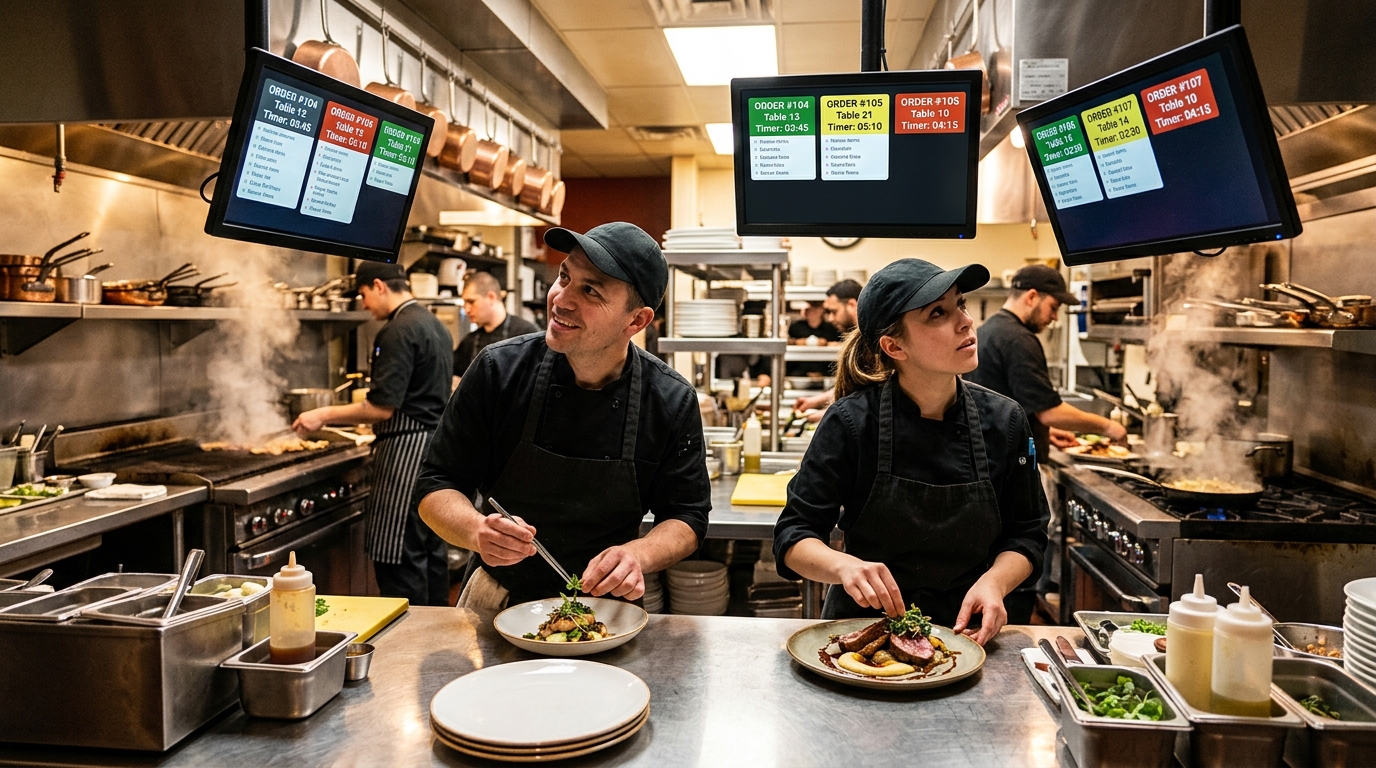
During peak dinner rush in a thriving casual restaurant or fast-casual cafe, the back-of-house often teeters on the edge of operational breakdown:
> *"Orders cascade in from waitstaff terminals and online delivery aggregators. The noisy thermal impact printer rattles relentlessly, spewing endless rolls of curly paper tickets. An exhaust fan draught blows Table 6's order into a corner grease trap. Unaware, the sauté chef prepares Table 11 first.*
> *Thirty-five minutes later, Table 6's guests complain bitterly to floor staff and demand a refund. The crumpled, grease-stained ticket is discovered only after the diners storm out, leaving behind a 1-star review."*
Paper kitchen chits—vulnerable to spills, heat, and physical misplacement—are a relic of 20th-century dining.
Forward-thinking F&B operators are modernizing their lines with Interactive Android Kitchen Display Systems (KDS), replacing brittle paper with real-time digital orchestration.
---
1. The Real Cost of Paper Kitchen Order Tickets (KOT)
Relying on thermal kitchen chits creates critical points of failure:
- Fragility in Hostile Environments: Thermal paper wrinkles, tears, dissolves under grease, and blackens when exposed to oven steam or heat lamps.
- First-In, First-Out (FIFO) Violations: Line cooks struggle to organize paper slips in chronological order under pressure, resulting in earlier tables waiting while newer orders are prioritized.
- Station Desynchronization: An appetizer finishes in 6 minutes while beverages sit untouched at the bar, leading to cold food and frustrated guests.
- Thermal Paper Waste: High-volume venues discard thousands of thermal receipt rolls each month—a recurring operational cost and an environmental burden.
---
2. How the GeminiPOS Android KDS Operates
By deploying standard, cost-effective commercial Android tablets across kitchen prep stations:
!Kitchen Display System Architecture, Multi-Station Routing and Bump Action Workflow
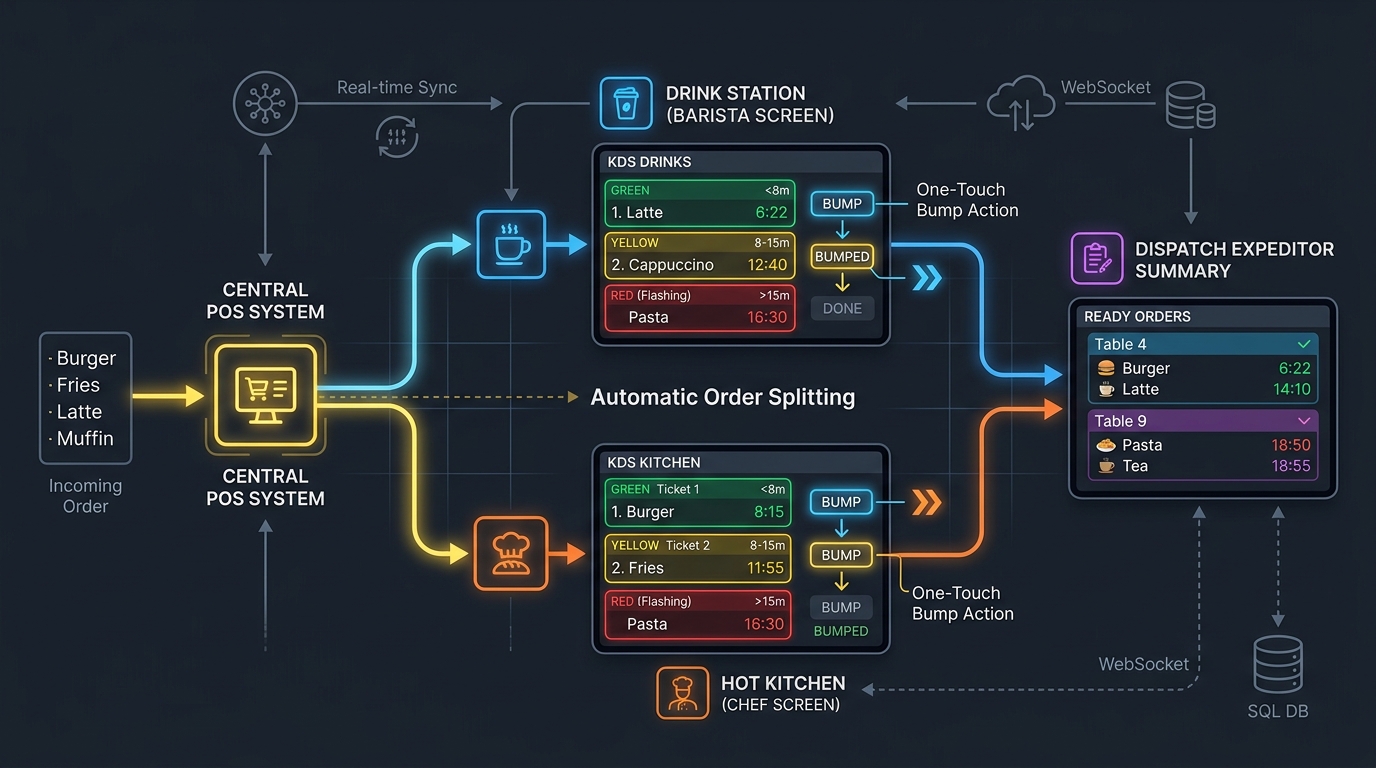
A. Intelligent Station Routing
When an order is confirmed at the POS terminal or placed at a self-ordering kiosk:
- GeminiPOS splits order line items programmatically: Cold beverages and coffees route exclusively to the Barista Screen.
- Grills, pastas, and fried appetizers route simultaneously to the Hot Kitchen Screen.
- Each station sees only actionable, pertinent items, eliminating cross-station noise and order clutter.
B. Visual Countdown Timers & Color Thresholds
Tickets display real-time prep timers that change state dynamically:
- Green (< 8 minutes): Fresh ticket; normal preparation pacing.
- Yellow (8 – 15 minutes): Warning stage; alerting line cooks to prioritize assembly.
- Flashing Red (> 15 minutes): Critical latency; signaling the expeditor or head chef to intervene immediately.
C. One-Touch Bump Action & Recall
- Line cooks tap Bump to clear completed items, instantly signaling the front-of-house food runner.
- If a mistake occurs or a customer modifies an item, the Recall feature revives cleared tickets in a single tap.
---
3. Data-Driven Kitchen Optimization: KDS Analytics
Beyond ditching paper, the KdsAnalyticsPage unlocks deep operational intelligence:
- Average Preparation Time (APT): Pinpoint slow-moving menu items (e.g., discovering slow-braised ribs require 24 minutes on average versus target 14 minutes).
- Kitchen Bottleneck Identification: Identify whether prep delays stem from the grill station, the pantry, or plating lines.
- Shift Prep Velocity: Compare line-cook speed across lunch versus dinner shifts, establishing objective data for staff training and scheduling.
---
4. Head-to-Head: Thermal Paper Tickets vs. Android KDS
Operational Dimension · Thermal Paper KOT Printers · GeminiPOS Android KDS Screens
Physical Durability · Susceptible to grease, water, heat damage · Rugged tablet mount; impervious to kitchen conditions
Order Sequencing · Disordered chits on manual ticket rails · Deterministic FIFO sorting by timestamp
Latency Visibility · Zero visibility until customers complain · Dynamic visual alerts (Green → Yellow → Red)
Paper & Consumables · Continuous recurring paper expense · Zero recurring paper cost (Paperless)
Telemetry & Metrics · No data logged on kitchen prep times · Comprehensive analytics on dish preparation speed
---
5. Conclusion
Guest satisfaction in hospitality is won or lost by speed and order accuracy. By transitioning from fragile paper chits to interactive Android Kitchen Display Systems, restaurant operators eliminate missing tickets, synchronize food stations, and turn tables faster to maximize peak-hour revenue.
> Ready to modernize your restaurant with paperless kitchen screens?
> Discover how GeminiPOS KDS powers efficient, high-velocity dining operations.
> Explore F&B & KDS Solutions or Book a Live Demonstration.
---
> 💡 Related Guide: Discover the complete feature overview, local-first offline architecture, and multi-outlet workflows of our flagship POS system in Malaysia built for modern retail and F&B businesses.