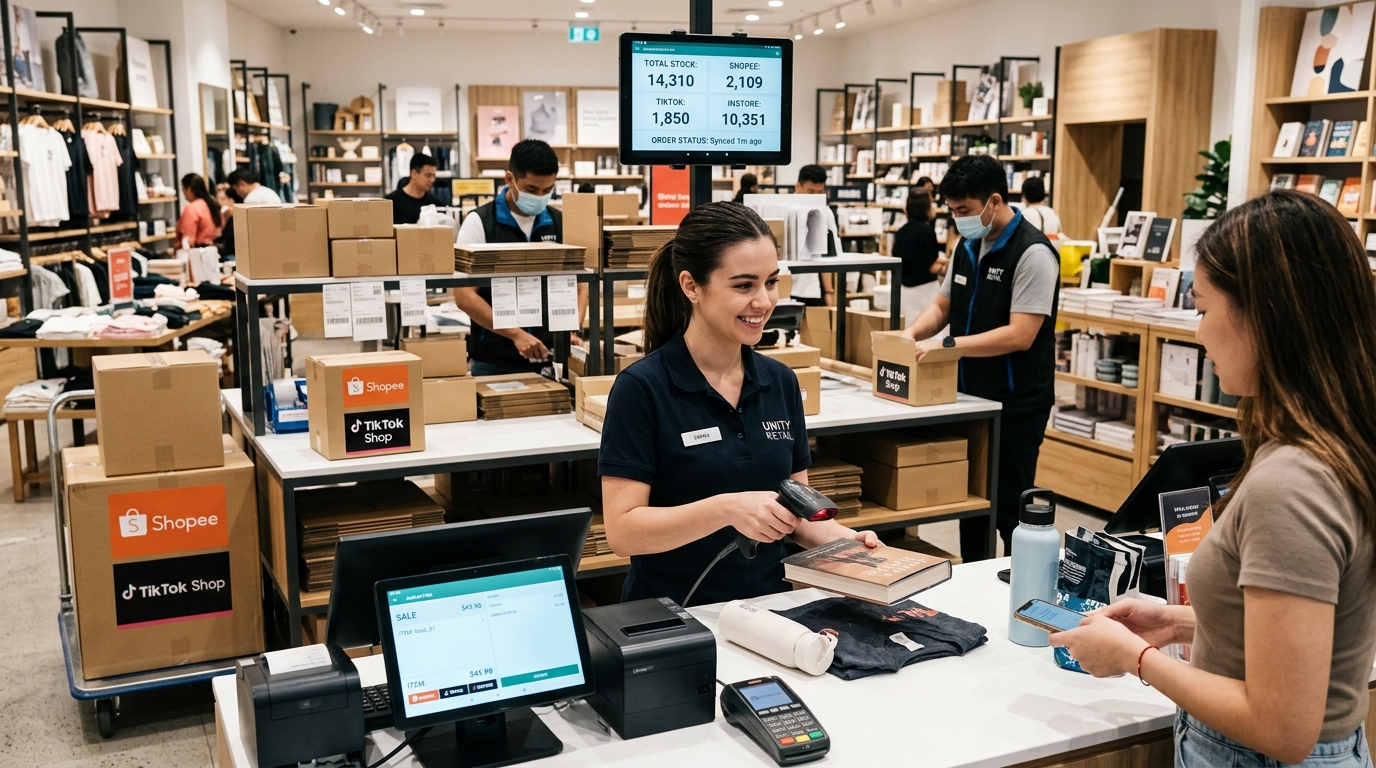
Operating a hybrid retail model—selling simultaneously across physical brick-and-mortar stores and digital marketplaces like Shopee, TikTok Shop, and Lazada—is the modern gold standard for merchants.
Yet behind rising multi-channel revenue lies an existential operational trap: Marketplace Overselling.
Consider this everyday retail breakdown:
> *"At 3:00 PM, a walk-in shopper visits your physical boutique and purchases the last 3 units of a trending denim jacket. The cashier is attending to a line of customers and forgets to manually log into Shopee and TikTok Shop Seller Centers to zero out the stock.*
> *At 3:30 PM, an online customer purchases that exact jacket on TikTok Shop.*
> *The merchant is forced to cancel the order. TikTok Shop slaps the store with a Seller Fault Cancellation Rate penalty, depresses search impressions, and revokes campaign privileges!"*
Leading marketplaces enforce draconian penalties against seller-initiated cancellations. If your store's cancellation rate breaches 2.5%, your marketplace shop can face immediate search demotion or account suspension.
The structural remedy is not telling staff to "work faster." It is implementing a Centralized Cloud Inventory Pool governed by an Automated Safety Buffer Stock Rule.
---
1. How Centralized Inventory Pooling & Safety Buffers Work
In legacy workflows, merchants artificially divide inventory into rigid silos: "10 units reserved for the counter, 10 for Shopee, 10 for TikTok". This fragments working capital. If in-store demand surges, the retailer misses out on sales while units sit dormant on digital channels.
The GeminiPOS omnichannel architecture unifies inventory dynamically:
!Omnichannel Inventory Synchronization and Safety Buffer Stock Rule Architecture Infographic
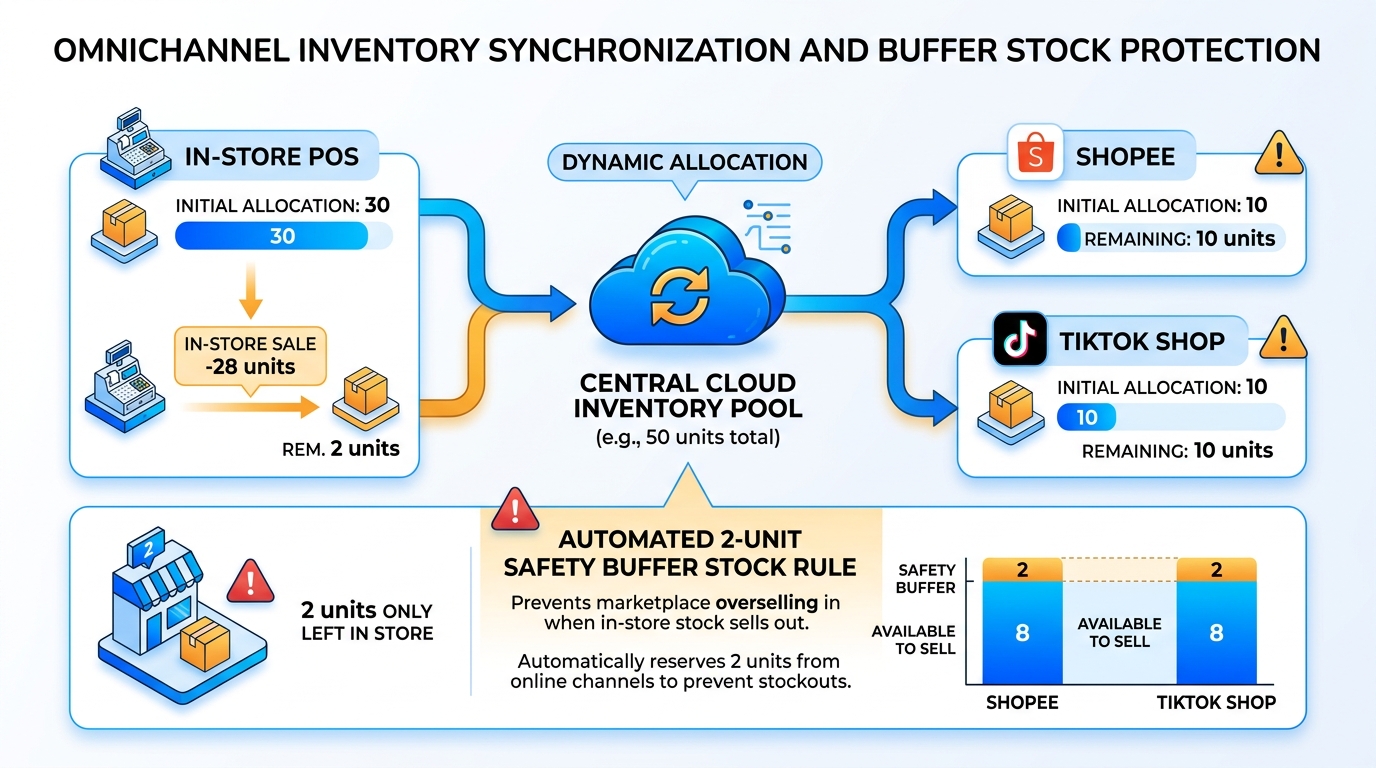
Workflow 1: Single Unified Inventory Pool
- Your store holds 50 physical units on site.
- The GeminiPOS central cloud ledger exposes those 50 units across all sales channels simultaneously.
- When an in-store cashier scans a barcode at the register, the local POS deducts the item and dispatches an asynchronous delta update to Shopee and TikTok Shop APIs in sub-second latency, instantly decrementing digital stock.
Workflow 2: Automated Dynamic Buffer Stock
Because e-commerce marketplace APIs exhibit unavoidable webhook network latency (often 2 to 5 seconds during peak traffic), an automated safety valve is essential:
- The merchant establishes a Safety Buffer Rule = 2 Units.
- The moment total physical inventory drops to 2 units, GeminiPOS instantly broadcasts a virtual stock level of '0' to Shopee and TikTok Shop, while reserving those final 2 units exclusively for the walk-in customer standing physically at the register!
- This automated defense completely shields the merchant from race-condition overselling, preserving a flawless 0% cancellation track record.
---
2. Why Fragmented Multi-App Stacks Fail
Many retailers try patching this problem with disconnected inventory apps or standalone web dashboards:
- Disconnected from Physical Hardware: Cashiers use an Android POS register, but the sync tool runs on a separate back-office desktop. During peak hours, no cashier has time to switch screens.
- Offline Vulnerability: If store Wi-Fi blinks, fragile third-party web apps crash or fail to record counter deductions, triggering massive overselling the moment connectivity resumes.
With GeminiPOS, in-store sales commit deterministically to on-device SQLite databases before synchronizing bi-directionally with cloud marketplace webhooks. Even during internet drops, counter transactions are queued and reconciled atomically upon reconnection.
---
3. Comparative Architecture: Manual Silos vs. GeminiPOS Engine
Operational Capability · Manual Multi-App Silos · GeminiPOS Omnichannel Sync Engine
Marketplace Stock Update Latency · Minutes to hours (dependent on manual memory) · Sub-second automated API propagation
Overselling Protection · Nonexistent (relies on manual updates) · Automated Dynamic Safety Buffer Stock
Shopee / TikTok Penalty Risk · Extremely high (frequent cancellation penalties) · Zero seller-fault stockout cancellations
Capital Allocation Efficiency · Fragmented stock across locked channels · Single pooled inventory maximizes sell-through
In-Store Online Fulfillment · Requires external PC to print shipping labels · Native AWB courier label printing at POS register
---
4. Merchant Best-Practice Checklist
To safeguard your multi-channel seller ratings starting today:
- Connect Official Marketplace APIs via OAuth: Link your Shopee and TikTok Shop merchant accounts directly into GeminiPOS store settings using official developer credentials.
- Calibrate Buffer Stock by Velocity: Apply a 2–3 unit buffer on viral fast-moving consumer goods (FMCG), and a 1-unit buffer on high-ticket boutique items.
- Execute Pack-and-Ship at the Register: Utilize GeminiPOS built-in courier fulfillment tools to print packing slips and carrier AWBs directly from thermal counter printers during quiet store hours.
---
5. Summary
Selling across both physical aisles and digital marketplaces should accelerate your revenue, not risk account suspensions. By implementing a unified inventory pool with automated buffer stock protection, hybrid retailers protect their hard-earned merchant ratings while maximizing stock velocity across every channel.
> Ready to eliminate marketplace overselling and protect your seller rating?
> Learn how GeminiPOS unifies counter sales with Shopee, TikTok Shop, and digital storefronts.
> Explore Omnichannel Features or Consult our Solutions Team.
---
> 💡 Related Guide: Discover the complete feature overview, local-first offline architecture, and multi-outlet workflows of our flagship POS system in Malaysia built for modern retail and F&B businesses.